
Last updated October 16, 2026
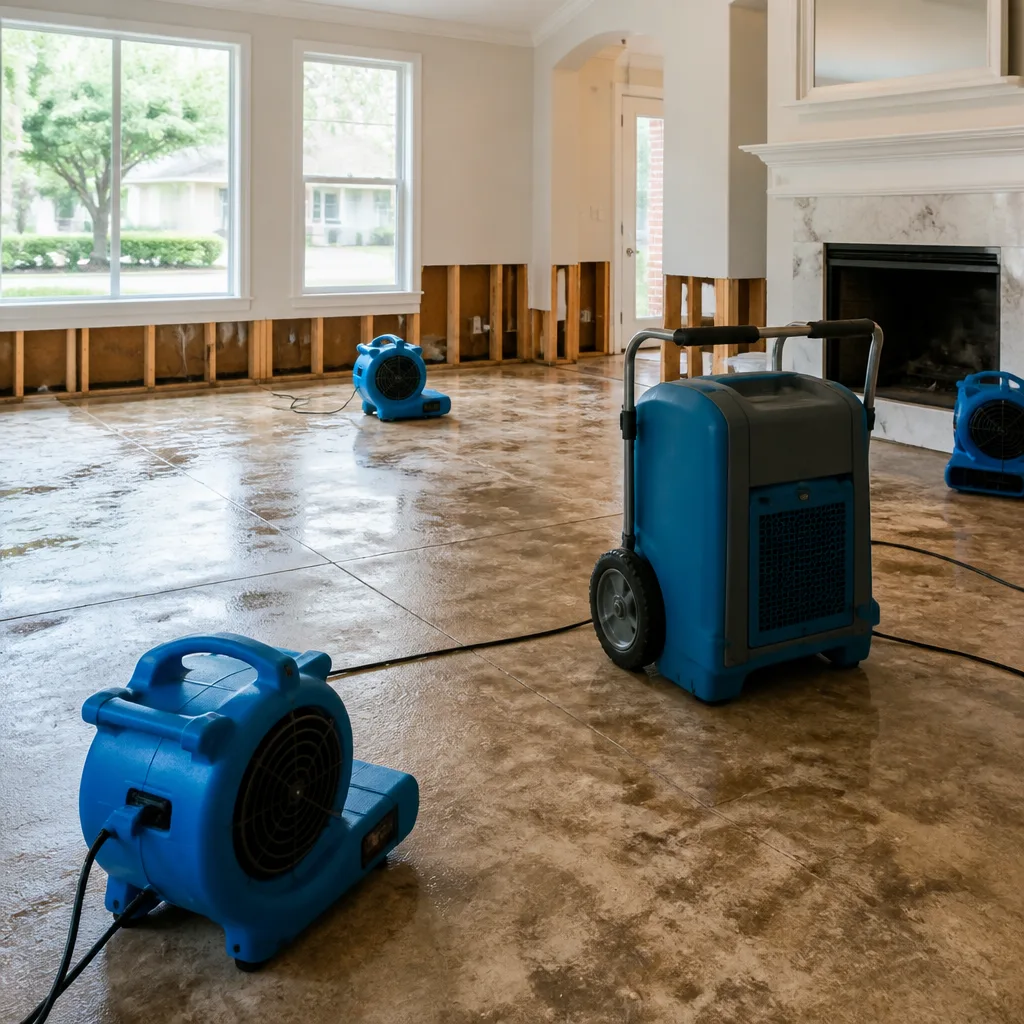 Water damage drying
 Fire & smoke cleanup
 Mold remediation
 Storm response
 Sewage cleanup
 Reconstruction
Free visual inspection and a written scope of work before any mitigation begins - photos, moisture readings, and drying logs go in your claim file
The scope we write is the scope we bill. Anything new gets shown to you, in writing, before we touch it.
Get your free estimateDIY vs Professional Damage Restoration: The Los Angeles Homeowner’s Decision Guide
A consumer-grade wet-vac removes standing water, but it can’t measure moisture content inside wall cavities. A wall that feels dry to the touch can still have 30% moisture content inside the stud bay, enough to grow mold within a week. That gap between what homeowners can see and what’s actually happening behind baseboards and under flooring is where most DIY water damage projects quietly fail, and in Los Angeles, where older homes, stucco construction, and coastal humidity collide, that gap gets wider. This guide, along with our step-by-step guide on hiring a damage restoration contractor in Los Angeles, draws the line between what a homeowner can reasonably tackle and what reliably makes the total cost higher when done without professional equipment. You’ll learn the moisture thresholds that matter, how insurance adjusters evaluate DIY cleanup, which tasks California law forbids unlicensed people from doing, and what professional drying equipment actually costs to rent versus what it delivers.
Restoration work we handle
Quick Answer
DIY damage restoration works for small, contained water spills you can dry within 24 to 48 hours, with documentation. It fails, often expensively, when water has penetrated wall cavities, flooring, or drywall, when mold is present or likely, after sewage or contaminated water, and after fires, where smoke residue penetrates surfaces in ways consumer cleaning can’t reverse. In Los Angeles, the decision comes down to three things: liability, insurance coverage, and the hidden moisture that consumer tools can’t measure. If any of those three is in doubt, professional restoration costs less than the alternative.
Table of Contents
- The Moisture Threshold: What ‘Dry’ Actually Means and Why Consumer Tools Can’t Measure It
- The Insurance Reality: How DIY Cleanup Affects a Los Angeles Claim
- Three Scenarios Where DIY Is Genuinely Appropriate
- Three Scenarios Where DIY Reliably Makes the Total Cost Higher
- California Licensing: What’s Legal and What Isn’t for Unlicensed Work
- The Equipment Math: Rental Costs vs Professional-Grade Drying Systems
- Hidden Threats in Los Angeles Homes: Asbestos, Lead, and Stucco Traps
- Common Mistakes to Avoid
- When to Call a Professional
- Frequently Asked Questions
- The Bottom Line
The Moisture Threshold: What ‘Dry’ Actually Means and Why Consumer Tools Can’t Measure It
Most homeowners define “dry” the way they define “clean”: if it looks right and feels right, it is right. Restoration professionals define dry with a number. Wood and drywall are considered dry when their moisture content reads between 6% and 12% on a moisture meter, depending on the material and the ambient conditions. California’s mold remediation guidelines, aligned with the IICRC S500 standard that governs professional water damage restoration, use specific moisture content thresholds to determine when a structure has been adequately dried. A stud reading 16% moisture content is not dry. It is a mold incubator.
The problem is that the moisture meters sold at hardware stores for $30 to $80 measure surface moisture only. They use two pins pressed against the material, and they cannot read what’s happening an inch and a half behind the drywall face, inside the stud bay, or under a tile floor. Professional restoration crews in Los Angeles use penetrating and non-penetrating meters that send signals deep into materials, thermal imaging cameras that map temperature differentials behind walls, and hygrometers that measure relative humidity, or RH, in the air and inside cavities. A Dri-Eaz moisture meter, the kind our technicians carry on every water damage job, measures wood, drywall, concrete, and plaster at depth. The consumer-grade pin meter does not.
Here’s what that gap looks like in practice. A washing machine supply line fails in a Mid-Wilshire bungalow. The homeowner vacuums up the visible water, runs fans for three days, and the floor feels dry. But water traveled under the baseboards, wicked up the drywall, and settled in the bottom plate of the wall framing. In our experience across Los Angeles neighborhoods from Sherman Oaks to Leimert Park, that hidden water sits there for weeks. Mold needs three things: moisture, organic material, and time. The organic material is the drywall paper and wood framing. The moisture is already there. And the time is whatever passes before someone notices the musty smell. By then, the repair is no longer drying. It’s mold remediation.
This is the core reason the DIY-versus-professional question is not really about skill. It’s about measurement. A homeowner can be diligent, thorough, and careful, and still fail because the equipment needed to know when the job is actually done is specialized, calibrated, and expensive. That’s the gap this guide is built around.
The Insurance Reality: How DIY Cleanup Affects a Los Angeles Claim
Insurance companies do not reject water damage claims because a homeowner tried to clean up. They reject them, or reduce them, because the cleanup was undocumented, incomplete, or made the damage worse. This is the single most important thing to understand before you touch a wet floor or a moldy wall in Los Angeles.
When you file a water damage claim, your insurer sends an adjuster whose job is to assess three things: the cause of the damage, the extent of the damage, and whether the homeowner took reasonable steps to prevent further damage, which is a standard condition in nearly every California homeowners policy. That third point is where DIY cleanup goes wrong. If you tore out wet drywall and threw it away before the adjuster saw it, the adjuster has no physical evidence of the damage. If you ran a box fan for four days and the wall still feels damp, the insurer may conclude you didn’t take sufficient mitigation steps. If you used a carpet shampooer to extract water from carpet and pad, and the pad rots anyway, the claim may be denied on the grounds that improper drying caused the secondary damage.
Insurance carriers require documentation. Photos of the standing water before cleanup. A log of what was done and when. Receipts for equipment rental. Moisture readings if possible. Professional restoration companies provide this as a matter of course. Our technicians at Dryden Restoration Los Angeles photograph every stage of the job, record moisture readings before and after drying, and produce a written report that adjusters recognize. That documentation is frequently the difference between a claim paid in full and a claim reduced by thousands of dollars while the adjuster argues about what was pre-existing and what was new damage.
There’s another layer in Los Angeles specifically. Many homeowners in the city carry policies with water damage deductibles of $1,000 to $5,000, and many older homes in neighborhoods like Glassell Park and Highland Park have had prior claims that already affected the policy. A DIY cleanup that leaves hidden moisture generates a mold claim six months later, and mold claims are the ones insurers fight hardest. When a homeowner says “we dried it ourselves,” and the wall cavity still reads 28% moisture content, the insurer has a reason to deny. We’ve seen that exact scenario play out in homes from the Valley to the Westside. The cost of professional drying is often less than the deductible on the mold claim that follows a failed DIY attempt.
Three Scenarios Where DIY Is Genuinely Appropriate
The honest answer is that some damage restoration work is appropriate for a homeowner, and saying otherwise would be overselling. Here are the three scenarios where DIY makes sense, along with the conditions that make it safe.
1. Small, contained, clean-water spills
A water heater in a garage with a concrete floor leaks a few gallons. A bathroom sink overflows briefly onto tile. A window left open during a light LA rain wets a small section of hardwood. If the water source is clean, meaning it came from a supply line or rain and not from a drain or toilet, and if the affected area is smaller than about 10 square feet, and if you can dry it completely within 24 to 48 hours, DIY is reasonable. The key phrase is “dry it completely.” That means lifting the edge of carpet to check the pad, removing baseboards if the water reached the wall, and verifying with a moisture meter that readings are below 12% before you close everything back up.
2. Exterior damage with no structural penetration
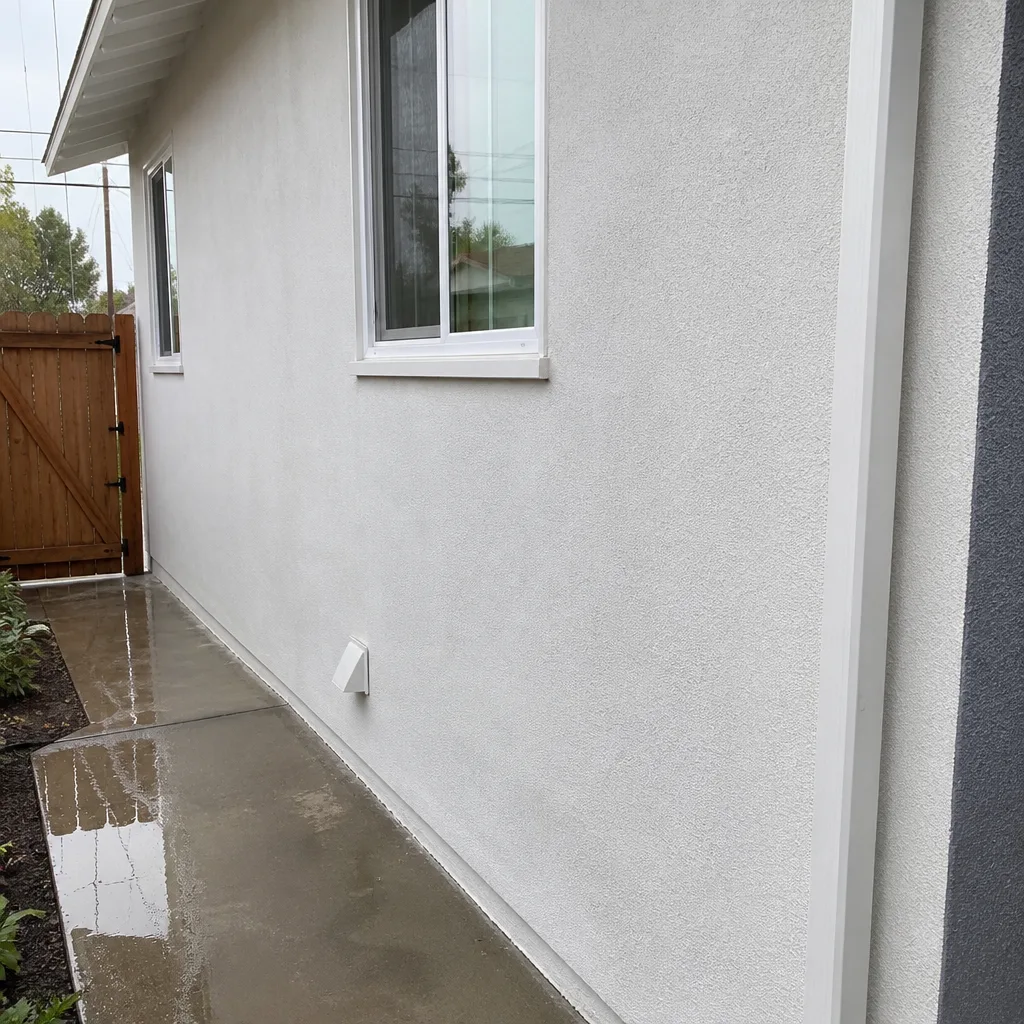
Los Angeles gets intense winter rainstorms, and sometimes a downspout disconnects and soaks a patch of stucco or a fence. If the water never entered the building envelope, meaning no interior walls, floors, or ceilings got wet, exterior cleanup and repair is usually DIY-appropriate. Clean gutters, reattach the downspout, patch the stucco, repaint. These are maintenance tasks, not restoration tasks-though for year-round planning, see our Seasonal Damage Restoration Care for Los Angeles.
3. Documented pre-existing conditions with no active leak
If a window has leaked in past winters and you know the framing is sound because you’ve checked it with a moisture meter, and you’re replacing the window anyway, that’s a remodel task, not an emergency restoration task. Document what you find, take photos, and keep receipts. If a future claim arises, that documentation protects you.
In all three scenarios, the common elements are containment, clean water, and verification. If you cannot verify dryness with a meter, you’re guessing. And guessing is how the cost multiplies later. For anything beyond these, the water damage restoration process we use in Los Angeles is built around measurement at every stage, not just visual inspection.
Three Scenarios Where DIY Reliably Makes the Total Cost Higher
Some homeowners treat professional restoration like a luxury they can skip. In these three scenarios, skipping it is the expensive choice. We’ve seen each of these play out in Los Angeles homes more times than we can count.
1. Water that has penetrated wall cavities or subfloor
When a supply line bursts behind a kitchen cabinet in a Hancock Park home, the visible puddle on the floor is maybe 20% of the problem. Water travels down, following gravity, and it wicks sideways through drywall and into subfloor. Drying that requires access: cutting small holes to ventilate wall cavities, injecting air into enclosed spaces, and running professional-grade dehumidification for days, not hours. A homeowner with fans and a dehumidifier from Home Depot can dry the surface. The cavity stays wet. Eventually, the baseboards swell, the paint bubbles, the floor crowns, and now the repair includes replacing materials, not just drying them. The DIY project that saved $1,500 in professional drying becomes a $9,000 rebuild.
2. Sewage or contaminated water
This one is non-negotiable. Water from a toilet overflow, a sewer backup, or a clogged main line in an older Los Angeles neighborhood is Category 3 water, meaning it contains bacteria, viruses, and other pathogens. Drying it is not enough. The affected materials, carpet, pad, drywall, insulation, often need to be removed and disposed of as contaminated waste. The area needs antimicrobial treatment. The equipment needed to do this safely includes personal protective equipment and proper containment. We find that homeowners who attempt sewage cleanup themselves typically don’t remove nearly enough material, and then they’re living in a home with residual contamination. This is not a skill gap. It’s a health risk.
3. Any fire damage, including small kitchen fires
In our experience, homeowners underestimate fire damage more than any other type. A stove fire that the homeowner puts out with an extinguisher might look like a cleaning problem: soot on the cabinets, a smell that lingers. But smoke doesn’t just sit on surfaces. It penetrates. It’s driven into drywall, insulation, ductwork, and every porous material by the heat and pressure of the fire. Protein smoke from a kitchen fire, in particular, leaves a nearly invisible residue that bonds to surfaces and releases odor for months. Cleaning the visible soot is not fire damage restoration. Professional restoration involves thermal fogging, ozone treatment, sealants, and sometimes replacement of materials that can’t be cleaned. We’ve walked into homes where the homeowner spent $800 on cleaning products and three weekends of work, and the smell was still there. The total cost of doing it right later is always higher than doing it right first.
California Licensing: What’s Legal and What Isn’t for Unlicensed Work
Here’s a fact most Los Angeles homeowners don’t know: some damage restoration tasks are illegal for unlicensed individuals to perform. This is not a matter of quality. It’s a matter of California law.
The California Contractors State License Board, or CSLB, regulates construction and restoration work. Any job valued at $500 or more, including labor and materials, requires a contractor’s license. But the dollar threshold is the least of it. The real issue is asbestos. Homes built before 1980 in Los Angeles commonly contain asbestos in popcorn ceilings, vinyl flooring, pipe insulation, duct wrap, and drywall joint compound. When a water or fire damage restoration project requires removing or disturbing those materials, and the disturbance exceeds 100 square feet, California law requires a certified asbestos contractor. A homeowner cannot legally perform that work themselves. In some cases, homeowners are technically allowed to do small asbestos-related work on their own single-family home, but the disposal requirements are strict, and the exposure risk is real.
This matters because a DIY water damage project in a pre-1980 Los Angeles house, and a huge percentage of the city’s housing stock falls into that category, can cross from “homeowner maintenance” into “illegal unlicensed work” the moment you cut into a wall or pull up old flooring. If you later sell the house and the unpermitted, unlicensed asbestos disturbance is discovered, you’ve created a disclosure problem. If a contractor you hired without a license does the work and someone is exposed, you carry the liability.
Professional restoration companies in Los Angeles are required to hold the appropriate CSLB licenses for the work they perform, and they’re required to test for asbestos before disturbing suspect materials. We do this as standard practice on every pre-1980 job. It’s not optional. It’s the law, and it’s the boundary between a restoration project and a regulatory violation.
The Equipment Math: Rental Costs vs Professional-Grade Drying Systems
Let’s look at actual numbers, because this is where the DIY-versus-professional calculation usually happens, and it’s where most homeowners get it wrong. For a full breakdown of ongoing maintenance, see our Water Damage Restoration Maintenance Checklist for Los Angeles Homeowners.
Here’s what rental equipment costs for a typical water damage job in Los Angeles, based on current rates at the major rental chains operating in the city:
- Commercial dehumidifier: $75 to $140 per day
- Air mover (high-velocity fan): $25 to $45 per day, and most jobs need 3 to 6
- Moisture meter: $20 to $40 per day for a pin-type surface meter
- Carpet fan or low-profile dryer: $35 to $60 per day
- Air scrubber for mold or fire: $95 to $180 per day
A typical single-room water damage job in a Los Angeles home, say a bedroom with a wet carpet, pad, drywall, and baseboards, needs one commercial dehumidifier, four air movers, and a moisture meter. Renting that equipment for four days, the minimum time for proper drying, costs roughly $500 to $700. That’s real money, but it’s manageable. So why would anyone pay a professional $1,800 to $3,500 for the same job?
The answer is that the rental equipment is not the same equipment. Let’s be specific. The dehumidifiers at rental chains are typically entry-level commercial units that remove 30 to 50 pints of water per day at standard conditions. The Dri-Eaz and Phoenix units our technicians run remove 70 to 145 pints per day, and critically, they perform differently in the conditions that matter most: low humidity, high humidity, and low temperatures. An underpowered dehumidifier in a Los Angeles home in January, when temperatures drop and RH stays high, may take twice as long to hit the same moisture target, and the homeowner is paying rental fees the whole time. The rental bill doesn’t stop because the machine is slow. It stops when the job is done. Slow equipment means a longer rental, and the savings shrink.
There’s also the matter of Injectidry systems, which are specialized drying panels that force air into wall cavities and under cabinets. Rental chains don’t carry them. They’re professional-only equipment, and they’re the only reliable way to dry the inside of a wall without cutting it open. A homeowner trying to dry a wet wall cavity with fans and a dehumidifier in the room is hoping that evaporation will do the work. In our experience across Los Angeles, it doesn’t. Not in the timeframe that prevents damage. The wall cavity holds the moisture, the drywall wicks it, and the mold clock runs.
The honest assessment: for a small, contained, clean-water spill on a hard surface, rental equipment can work. For anything involving carpet, drywall, cavities, or multiple rooms, the rental equipment underperforms the professional systems, and the rental period stretches long enough that the cost savings vanish while the damage window stays open.
Hidden Threats in Los Angeles Homes: Asbestos, Lead, and Stucco Traps
Los Angeles housing stock has specific characteristics that change the DIY calculus, and most of the generic online advice about water damage restoration doesn’t account for them.
First, the age of the housing. A large share of single-family homes in Los Angeles were built before 1980, which means asbestos-containing materials are statistically likely in ceilings, flooring, insulation, and drywall compound. Any restoration work that disturbs those materials triggers the legal and safety requirements described above. Testing is not optional for professional crews, and the cost of testing, a few hundred dollars, is far less than the cost of abatement if contaminated materials are disturbed without controls.
Second, stucco construction. Los Angeles homes are overwhelmingly stucco-clad, and stucco does something peculiar with water. It can hide moisture behind it for a long time, because the exterior surface can feel completely dry while the sheathing and framing behind it are wet. This is especially true in coastal neighborhoods like San Pedro and Playa del Rey, where marine layer humidity slows evaporation. A homeowner who sees a water stain on an interior wall under a window may not realize that the leak has been active for months, and the wall cavity has been wet for months. By the time the problem is visible, the damage is already substantial.
Third, the Valley-versus-Basin climate split. Los Angeles is not one climate. The San Fernando Valley regularly hits 100 degrees in summer, and that heat accelerates drying, which sounds good, but it also drives moisture deeper into materials as surface water evaporates quickly while subsurface water stays put. The Basin, especially near the coast, has higher ambient RH, which slows evaporation and extends the mold window. Different microclimates require different drying strategies. A one-size-fits-all approach, the kind a YouTube tutorial provides, doesn’t account for Woodland Hills versus Westchester.
Fourth, lead paint. Homes built before 1978 commonly contain lead paint, and disturbing it during restoration creates dust hazards and disposal requirements. Professional restoration companies in Los Angeles are required to follow EPA lead-safe work practices on pre-1978 homes. A homeowner sanding or scraping a water-damaged wall in a 1950s home in Eagle Rock may be creating lead dust they’re not aware of.
For all these reasons, the Los Angeles-specific part of the DIY decision is not “am I handy enough?” It’s “do I know what’s in the materials I’m about to disturb, and does California law allow me to disturb them?” For most homeowners, the answer is no.
Common Mistakes to Avoid
- Defining “dry” by touch. Fingers cannot measure moisture content. A wall that feels dry can read 30% MC inside the stud bay. The only way to know is a moisture meter, and a consumer-grade pin meter doesn’t read deep enough.
- Using a household dehumidifier on a flooded room. The dehumidifier you use to keep a bathroom from getting musty removes 20 to 30 pints per day. A flooded room in a Los Angeles home needs 70 to 145 pints per day removed for days. The household unit will run constantly, burn out, and the room will still be wet.
- Closing up walls before they’re dry. This is the most expensive mistake in our experience. The homeowner dries for two days, decides it’s good enough, reinstalls baseboards and repaints, and seals the moisture in. Mold grows inside the cavity, invisible, for months.
- Throwing away evidence before the adjuster arrives. If you tear out wet drywall and haul it to the curb before your insurance adjuster sees it, you’ve removed the physical proof of the damage. The claim gets harder to prove, and the payout gets smaller.
- Treating sewage water like clean water. Water from a toilet overflow or sewer backup contains pathogens. Drying it is not sanitizing it. Affected porous materials need removal and disposal, not just airing out.
- Ignoring the asbestos question in pre-1980 homes. If you’re in an older Los Angeles house and you’re cutting into walls or pulling up flooring, you may be disturbing asbestos-containing materials. The legal and health consequences of getting that wrong outweigh any money saved.
- Renting one air mover and expecting it to dry a room. Professional drying uses multiple air movers positioned to create airflow across every wet surface. One fan pointed at the middle of the floor does very little for the baseboards, the wall behind the furniture, and the closet.
When to Call a Professional
Call a professional when the water source is contaminated. Call one when water has reached drywall, baseboards, flooring, or wall cavities. Call one after any fire, even a small kitchen fire. Call one when you smell mold, see staining, or have any reason to believe moisture has been present for more than 48 hours. Call one if your home was built before 1980 and the work will disturb ceilings, walls, or flooring. And call one if you’ve already started a DIY cleanup and the moisture meter readings won’t come down. Dryden Restoration Los Angeles offers free estimates for homeowners throughout Los Angeles, and the phone is answered by a live person 24 hours a day, not a voicemail tree. Call (213) 423-6383 and you’ll get a straight answer about your situation, a written price before any work starts, and a clear plan. The estimate costs you nothing, and it gives you a baseline against which to measure any DIY plan.
Frequently Asked Questions
Professional water damage restoration in Los Angeles typically costs between $1,800 and $4,500 for a single-room clean-water job, including extraction, drying, and monitoring. Sewage cleanup and mold remediation start higher, usually $3,000 to $8,000, because of the containment, disposal, and antimicrobial requirements. Fire damage restoration is the most variable, running from $3,000 for a small kitchen fire to $30,000 or more for a major event. These are honest ranges based on our work across Los Angeles, and the only way to get an exact number for your home is an on-site assessment. Call (213) 423-6383 and we’ll provide a written price before any work starts.
Most California homeowners policies cover sudden and accidental water damage, such as a burst pipe or an appliance failure, and they typically cover the restoration costs minus your deductible. They do not cover gradual leaks, flooding from outside, or neglect. The key to a successful claim is documentation: photographs, moisture readings, and a written record of mitigation steps. Professional restoration companies provide that documentation as part of the job, which is one reason a DIY cleanup can end up costing more than the professional route would have. We work directly with adjusters and provide photo documentation throughout every job.
When you call (213) 423-6383, a live person answers, day or night, and we’ll give you a named arrival window, not a vague “sometime tomorrow.” For water damage emergencies, speed matters because the mold clock starts the moment water touches drywall. We typically arrive the same day for emergency calls within Los Angeles and begin mitigation immediately. The first hours determine how much of your home can be dried instead of replaced.
Cleaning visible mold without addressing the moisture source is a temporary cosmetic fix. Mold grows where moisture exists, and if the moisture is still present behind the wall or under the floor, the mold returns within weeks. In Los Angeles, where many homes have stucco exteriors that hide moisture, visible mold on an interior surface often indicates a larger hidden problem. A professional mold remediation in Los Angeles assessment includes moisture mapping to find the source, not just treatment of the visible growth. If the moisture source isn’t fixed, no amount of cleaning solves the problem.
You can handle the claim yourself, but most homeowners find it faster and more successful to have the restoration company coordinate directly with the adjuster. We provide the adjuster with moisture readings, photographs, and a written scope of damage in the format insurers expect. When the restoration company and the adjuster are speaking the same language, with the same documentation, the claim moves faster and the coverage decisions are clearer. You stay informed at every step, but you don’t have to translate restoration terminology to your insurance company.
For clean-water damage, usually yes. For sewage contamination or mold remediation, the affected area may need containment, and depending on the extent of the damage, temporary relocation may be the safer choice. We assess this on every job and give you a straight answer. The goal is always to restore your home safely with minimal disruption, and we’ll tell you plainly whether the standards, which are aligned with IICRC and RIA guidelines, call for containment or vacancy in your specific situation.
The Bottom Line
The DIY versus professional question is not a test of your competence. It’s a measurement problem, a liability problem, and an insurance problem. A homeowner can be entirely capable of running a dehumidifier and entirely unable to verify that the wall cavity behind it is dry. In Los Angeles, where older homes carry asbestos, stucco hides moisture, and the climate varies block by block, the margin for error is thinner than elsewhere. We’re a local, independently operated Kingswell company, and we’ve been restoring homes across Los Angeles since 2005. Our commitment is specific: a written price before any work begins, a named arrival window, and a 365-day written guarantee on every repair. If something fails within a year, we come back and make it right at no charge. Call (213) 423-6383 or visit our Dryden Restoration Los Angeles home page to learn more. The estimate is free, and it gives you a real number to compare against any DIY plan.
Written by Carl Brandt, Owner at Dryden Restoration Los Angeles, serving Los Angeles since 2005. Explore more guides & resources on our blog.
See the difference
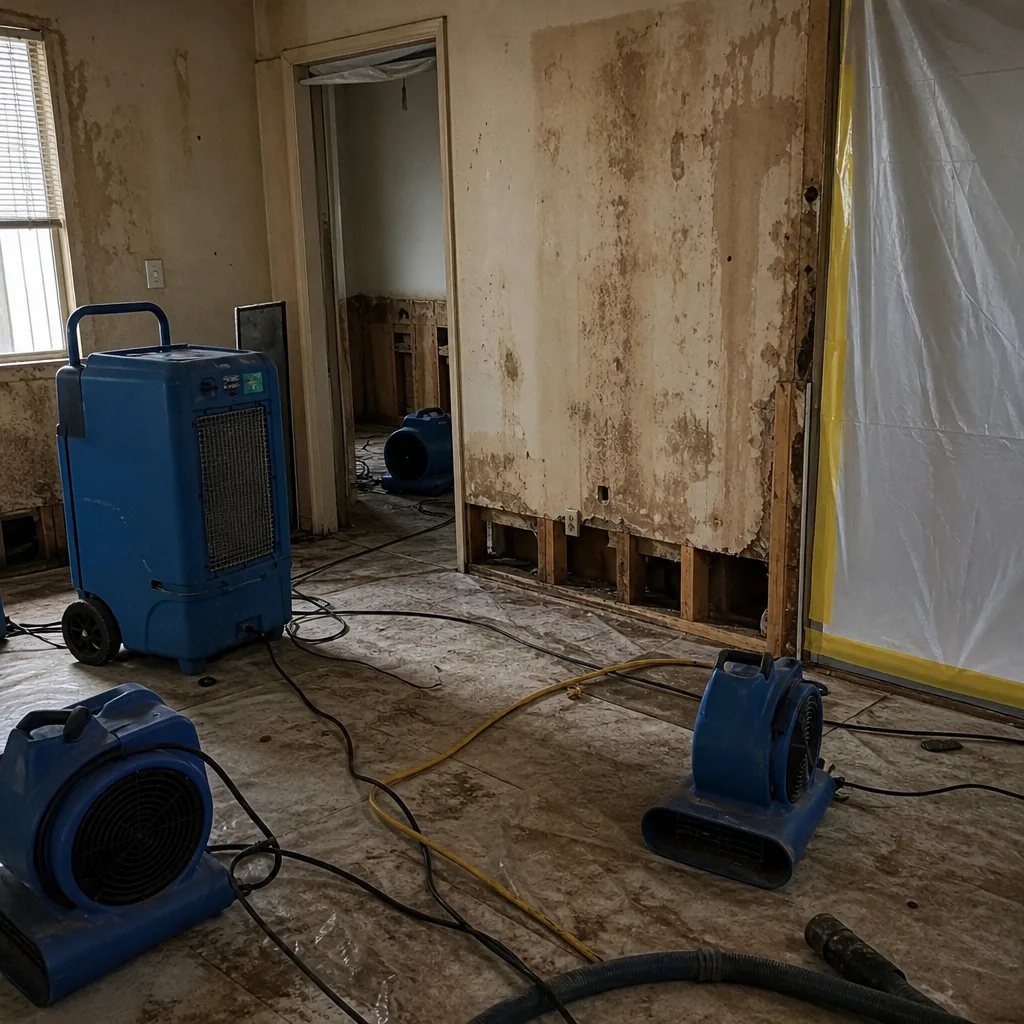 Before
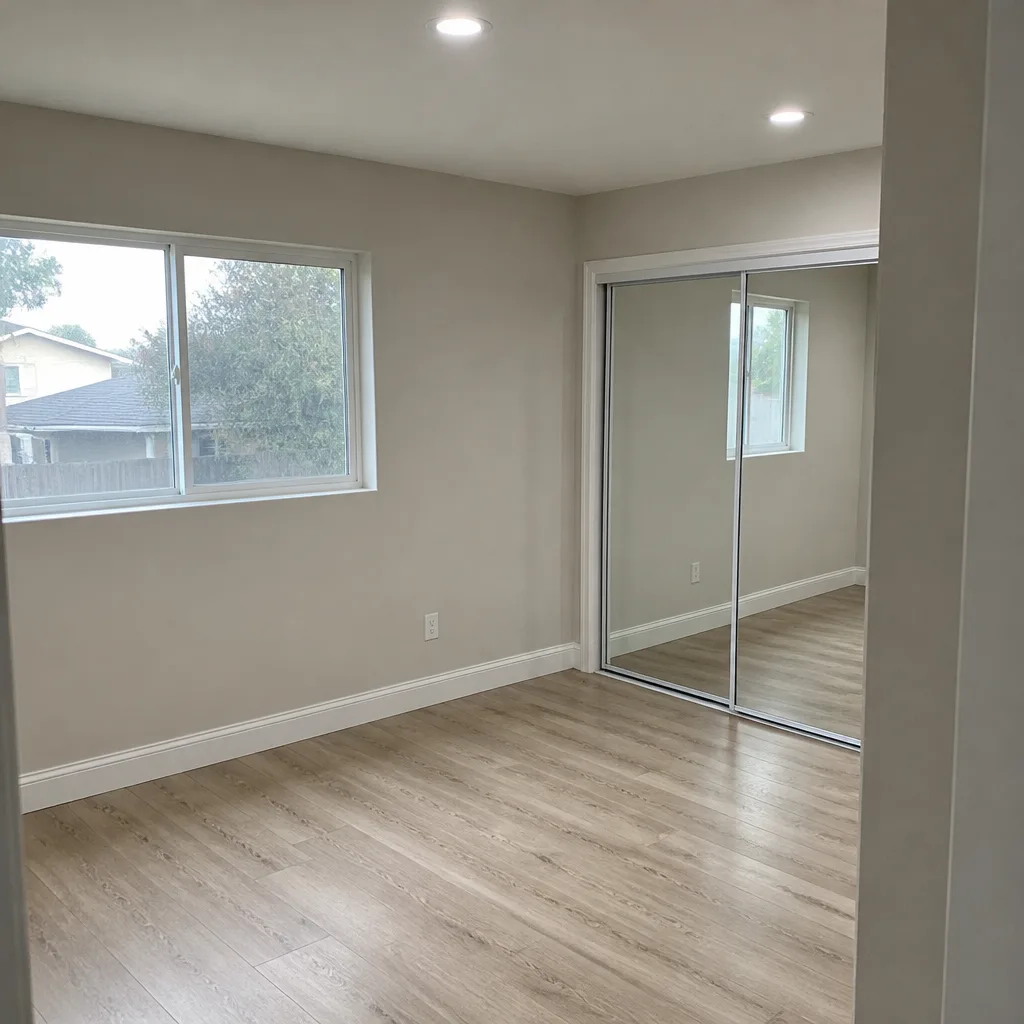 After
After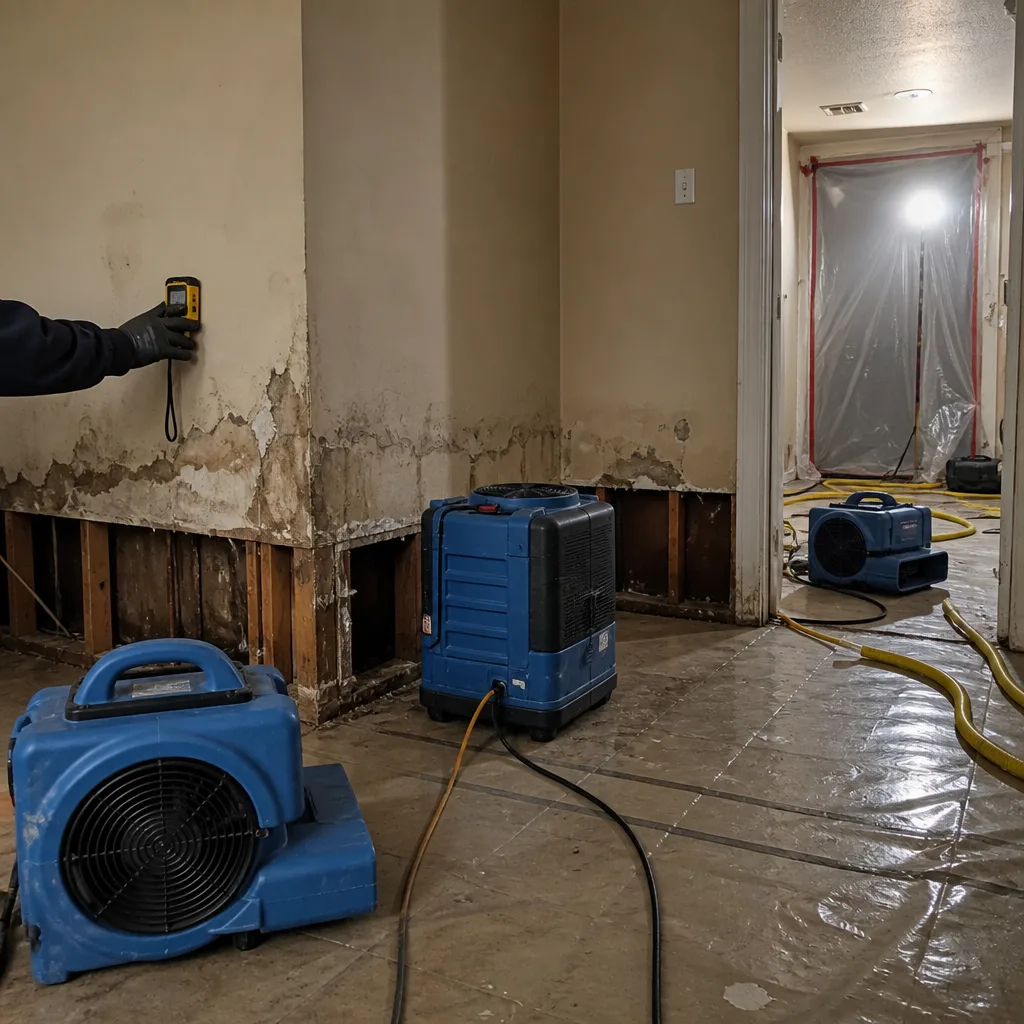 Before
 After
After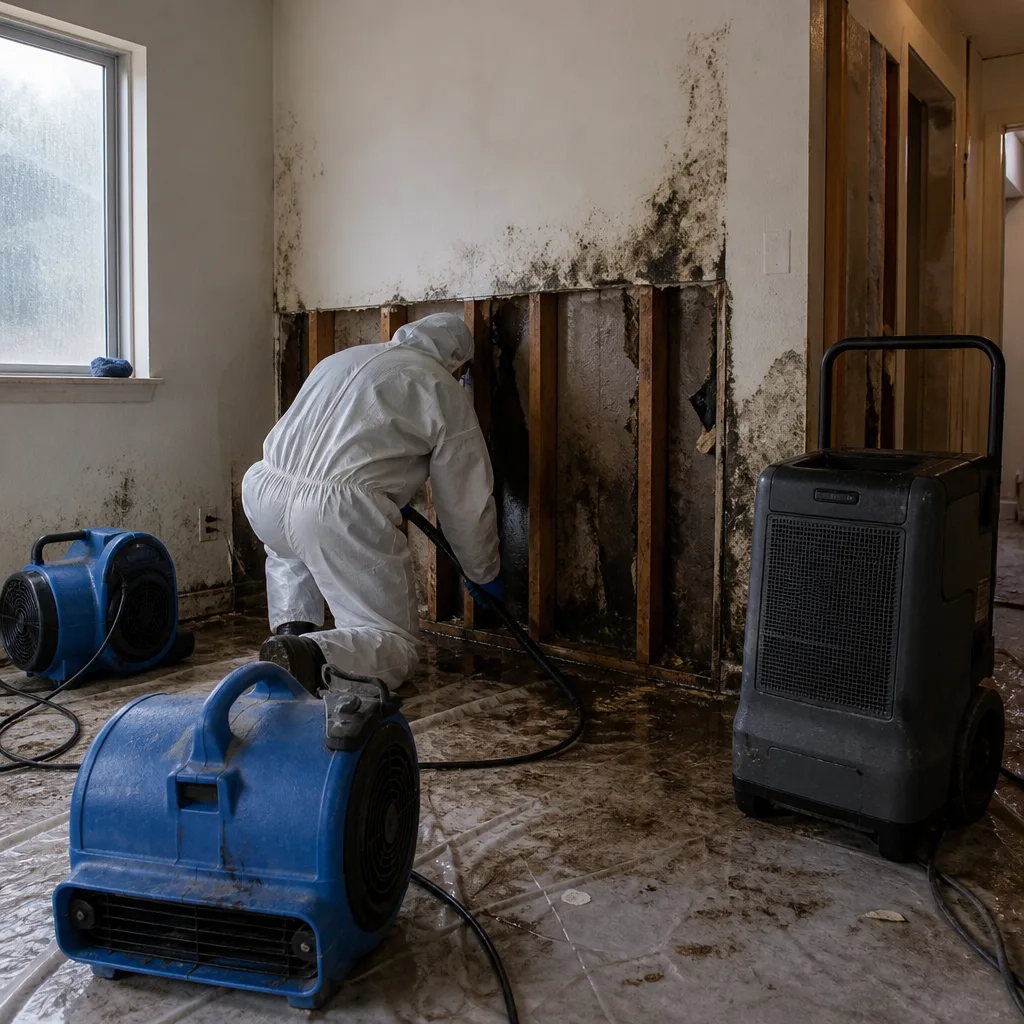 Before
 After
After