
Last updated October 16, 2026
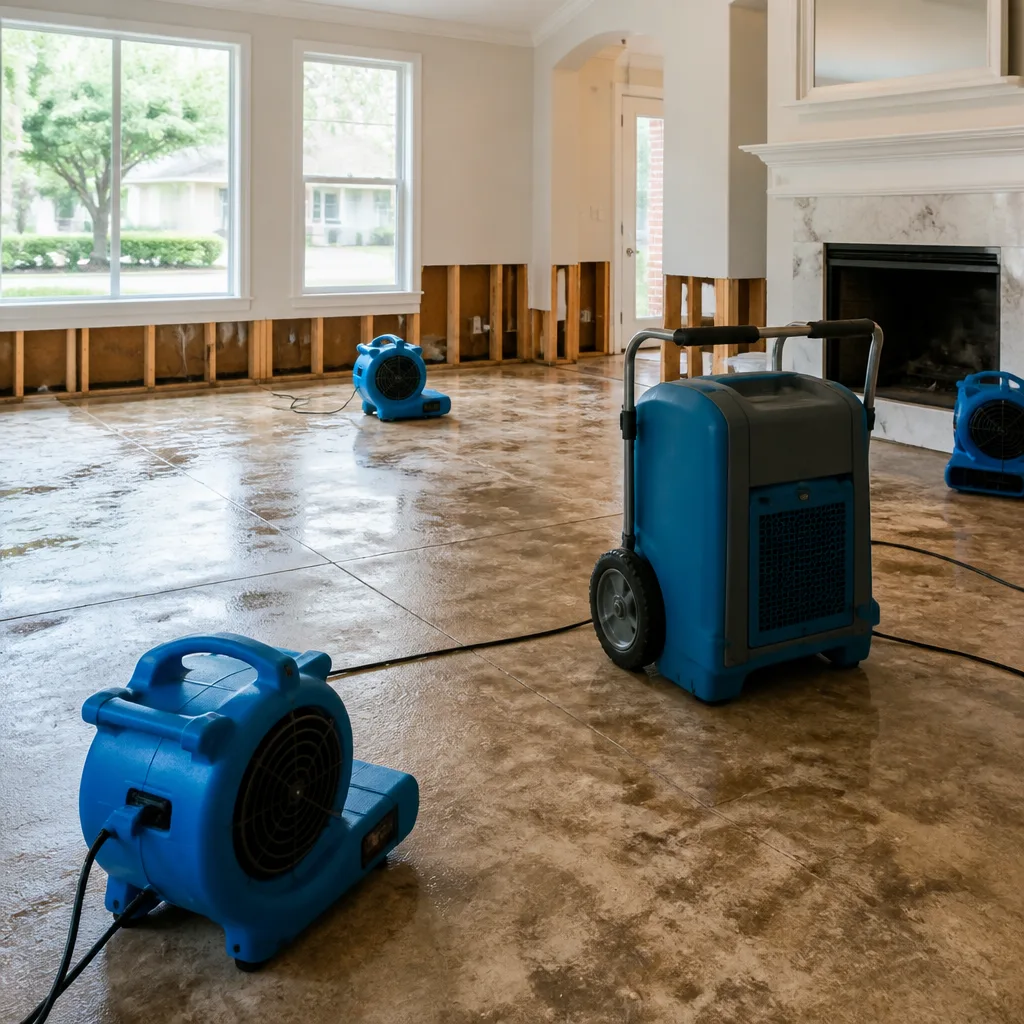 Water damage drying
 Fire & smoke cleanup
 Mold remediation
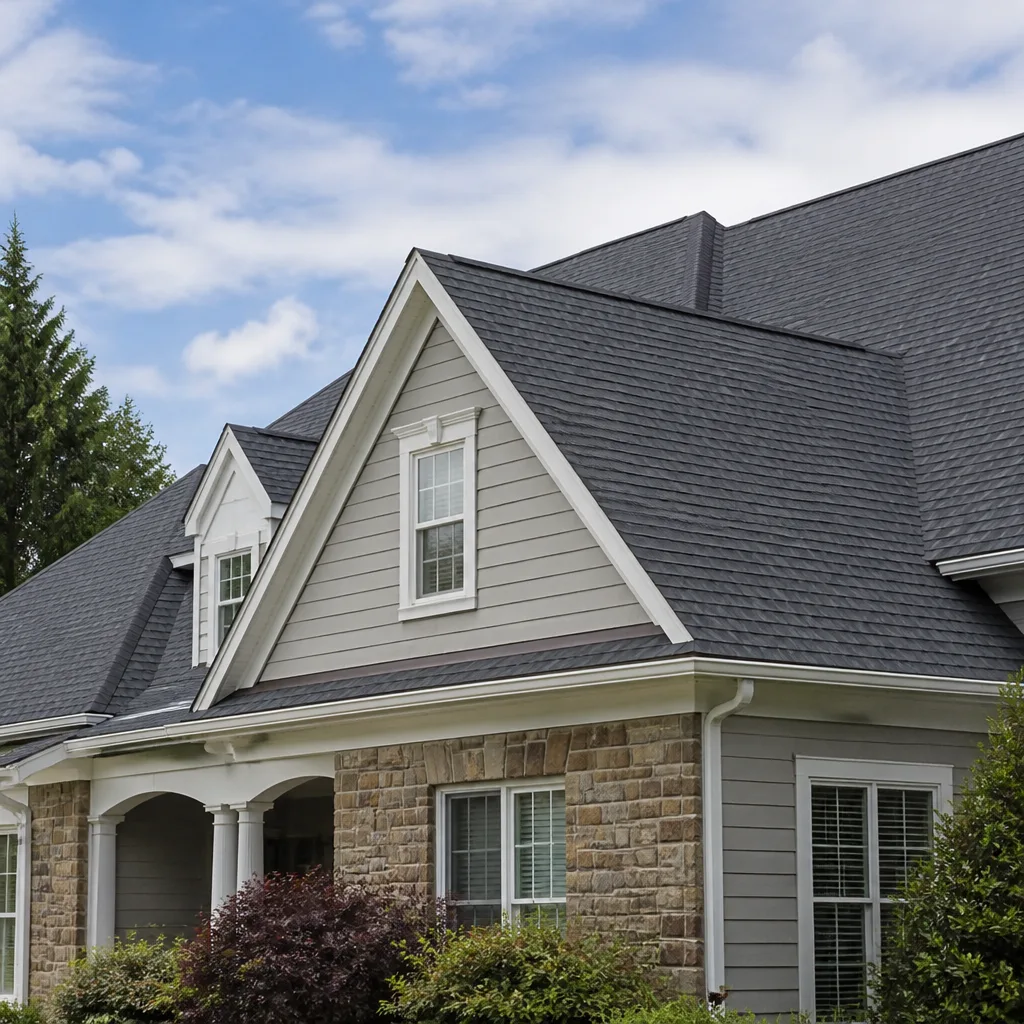 Storm response
 Sewage cleanup
 Reconstruction
Free visual inspection and a written scope of work before any mitigation begins - photos, moisture readings, and drying logs go in your claim file
The scope we write is the scope we bill. Anything new gets shown to you, in writing, before we touch it.
Get your free estimateSeasonal Damage Restoration Care for Los Angeles: Year-Round Homeowner’s Guide
Santa Ana wind events in October and November can push embers miles ahead of a fire line, and those same winds dry out roof flashing and caulk seals that will leak the moment the first December rain arrives. The two risk seasons in Los Angeles are connected in ways most homeowners never prepare for until water is already inside the house. This guide-along with our Complete Guide to Damage Restoration in Los Angeles-walks through the actual climate patterns of Los Angeles, month by month, and shows you exactly what to check, when to check it, and what professional services should cost so you can budget before you need them. You’ll learn the five pre-rain checks that prevent most water intrusion damage, why June gloom causes mold in specific rooms, and how post-fire soil conditions raise mudslide risk for homes in the foothills and valleys.
Quick Answer
Seasonal damage prevention in Los Angeles means preparing for two distinct risk windows: the November-to-March atmospheric river season (heavy rain, saturated soil, roof leaks) and the May-to-October heat-and-fire season (Santa Ana winds, dry caulk and flashing, HVAC condensate overflow, and wildfire-adjacent smoke and ember intrusion). The most effective approach is a pre-rain inspection each September or early October plus a heat-season inspection each May, with total annual professional service costs typically running $650 to $1,400 for a standard Los Angeles single-family home.
Restoration work we handle
Table of Contents
- Why Los Angeles Has Two Risk Seasons, Not Four
- Month-by-Month Los Angeles Homeowner’s Calendar
- The Pre-Rain Window: September Through October
- Atmospheric River Season: November Through March
- Heat and Fire Season: May Through October
- June Gloom: The Moisture Period Nobody Watches
- Post-Fire Soil Conditions and Mudslide Risk
- What to Check Yourself vs. What to Hire Out
Why Los Angeles Has Two Risk Seasons, Not Four
Most seasonal home maintenance guides assume a four-season climate: freeze-thaw cycles in winter, heavy rain in spring, heat in summer, falling leaves in autumn. Los Angeles doesn’t work that way, and a generic guide leaves LA homeowners unprotected in the exact months when damage actually occurs. What Los Angeles has instead are two distinct risk windows that each demand a different set of homeowner actions.
The first window runs roughly November through March, when atmospheric rivers pull moisture from the Pacific and deliver it in short, intense bursts. One storm can drop 2 to 4 inches of rain in 24 to 48 hours, which is more than enough to expose a failing roof flashing, a cracked chimney cap, or a downspout that drains against the foundation. The soil around Los Angeles homes, much of it clay-heavy, expands when saturated and puts pressure on foundation walls and slab edges.
The second window runs May through October, when temperatures climb, humidity drops into single digits during Santa Ana events, and fire risk spikes. This season isn’t just about wildfire. The same dry air that draws moisture out of hillside brush also draws moisture out of the caulk around your windows, the flashing on your roof, and the soil beneath your foundation. Homes settle, seals crack, and the damage goes invisible until the first winter rain finds it.
The two seasons are connected. A roof flashing that cracks during an October Santa Ana event becomes an active leak during the December atmospheric river. And a home that took water damage in February may still have elevated moisture in its wall cavities when the June gloom arrives, creating conditions for mold growth in rooms that never see sunlight. Understanding this connection is the difference between catching a $300 flashing repair in October and paying $6,000 to $12,000 for a full water damage restoration in January, as detailed in our Damage Restoration Cost Breakdown: The Los Angeles Homeowner’s Reference for 2026.
Month-by-Month Los Angeles Homeowner’s Calendar
Here is the actual seasonal rhythm of Los Angeles home maintenance, organized by month rather than by season. Each entry lists the primary risk and the action that mitigates it.
January
Primary risk: Saturated soil, roof leaks, and flooded crawlspaces from winter storms.
Action: After each heavy rain, walk the exterior perimeter. Look for standing water within 3 feet of the foundation, new cracks in stucco or siding, and damp spots on interior ceilings. If you see a water stain, note the exact location and mark it with painter’s tape so you can tell whether it grows after the next storm. Call us for a free assessment if the stain grows, darkens, or feels soft to the touch. A small stain can mean a large pocket of water trapped above the drywall.
February
Primary risk: Continued atmospheric river activity combined with already-saturated soil. This is the month when slope failures and retaining wall issues most often appear in hillside neighborhoods like Silver Lake, Echo Park, and Mount Washington.
Action: Inspect any retaining walls on your property for new cracks, bulging, or leaning. Check that weep holes (small openings near the base of retaining walls that let water escape) are clear of debris. If you see a new crack wider than a quarter inch, photograph it from the same angle every two weeks. Growth means soil pressure is shifting behind the wall.
March
Primary risk: Late-season storms meeting early spring growth. Roots are active again and can shift underground drainage lines.
Action: Run every outdoor spigot and check the ground around sprinkler valves and main water line entry points. Look for soft, soggy soil or unusually green patches of grass, which can indicate a slow underground leak that has been developing through the winter. Check your water bill against February; an unexplained increase of 20% or more suggests a leak.
April
Primary risk: Transition month. The last rain can happen this month, but the first heat arrives, which accelerates drying in wall cavities that got wet during winter.
Action: Re-inspect any water stains you marked during winter. If they have dried clean, the roof repair likely worked. If they remain damp or have a musty odor, moisture is still trapped and mold may already be active. April is also the right month to inspect attic insulation for dark stains or compression, both signs that moisture moved through the attic during winter.
May
Primary risk: First sustained heat. HVAC condensate lines that cracked or clogged during winter start leaking onto ceilings or into closets when the air conditioner runs at full capacity.
Action: Run your air conditioner for 30 minutes, then check the condensate line exit point outside the house. Water should be dripping steadily. If it isn’t, the line may be clogged. Check the area around your indoor AC unit for water stains, warped flooring, or a faint sour smell. Clogged condensate lines are one of the most common sources of hidden water damage in Los Angeles homes, and most homeowners never check them until the ceiling below the unit collapses.
June
Primary risk: June gloom. Morning marine layer keeps relative humidity (RH) between 70% and 90% for hours each day. In rooms with poor air circulation, surface mold can develop on walls, window sills, and closet contents.
Action: Open windows when the sun comes out, run bathroom exhaust fans during and after showers, and check closets on exterior walls. If you find a white, gray, or green patch on clothing, shoes, or drywall, do not paint over it or wipe it with bleach. Surface cleaning without addressing the moisture source usually leads to regrowth within weeks.
July
Primary risk: Extended heat plus older plumbing. Supply lines to refrigerators, washing machines, and water heaters are under temperature stress, and small pinhole leaks expand.
Action: Pull the refrigerator away from the wall once and inspect the supply line. Look for cracks, kinks, or green corrosion at the connection points. Check the washing machine hoses for bulges near the fitting ends. A burst washing machine supply line releases 5 to 7 gallons per minute, which is one of the most expensive categories of residential water damage in Los Angeles.
August
Primary risk: Peak fire season. Ember intrusion is the leading cause of home loss in wildfire, not the flame front itself. Vents, gaps in siding, and dry debris in gutters are the primary entry points.
Action: Clear gutters and roof valleys of dry leaves and pine needles. Check that all attic, gable, and foundation vents have mesh screens with openings no larger than one-eighth inch. Walk the roof line and look for missing or cracked tiles. A single open vent can allow an ember into the attic, where it will ignite the insulation and spread before you ever see smoke.
September
Primary risk: This is the critical pre-rain window. The soil is at its driest, clay has contracted away from foundations, and the same dry Santa Ana air that elevated fire risk has also dried out every exterior seal on the house.
Action: Complete the five pre-rain checks described in detail below, or download our Water Damage Restoration Maintenance Checklist for Los Angeles Homeowners. This single month of attention prevents more Los Angeles water damage than any other action you can take as a homeowner.
October
Primary risk: Santa Ana wind events. Sustained winds of 30 to 50 mph with gusts above 70 mph physically stress roof tiles, flashing, and chimney caps. Dry conditions keep fire risk elevated through the end of the month.
Action: After the first strong Santa Ana event, do a visual roof inspection from the ground with binoculars. Look for shifted tiles, lifted flashing, and anything that appears out of place. Don’t climb on the roof yourself, especially in wind. If you see damage, a roof inspection typically costs $150 to $300 in Los Angeles and is far cheaper than discovering the damage from inside the house during a December storm.
November
Primary risk: The first substantial rain of the season usually arrives this month, often after 6 to 7 months of dry weather. That first storm is when deferred maintenance gets exposed.
Action: The day before a forecast storm, clear your gutters one more time if leaves have accumulated since September. Check that downspouts are directed at least 4 feet from the foundation. Move anything stored against the house, including firewood, potted plants, and patio furniture, so water can drain naturally.
December
Primary risk: Peak atmospheric river activity. Multiple storms in a short window mean saturated soil, overwhelmed drainage systems, and roof leaks that weren’t visible during a single-storm event.
Action: During heavy rain, check your attic and the rooms directly under roof valleys and chimneys. If you hear dripping or see a water stain anywhere, note it and check again in 24 hours. Active leaks should be addressed immediately. A professional water damage response in Los Angeles during an atmospheric river event typically costs $2,500 to $7,000 depending on the extent, and rapid response keeps it at the low end.
The Pre-Rain Window: September Through October
Every Los Angeles homeowner should treat September and October as a mandatory preparation period. The specific weather pattern matters here: after 6 to 7 months of dry heat, every flexible seal on the exterior of the house has contracted. When the first atmospheric river arrives, water doesn’t need a large opening to enter. A crack in caulk no thicker than a credit card is enough for capillary action to pull moisture into the wall cavity, where it will stay damp for months.
Here are the five specific checks that prevent the majority of water intrusion damage in Los Angeles homes. Complete these every September or October, before the first storm.
- Roof flashing and chimney caps. Flashing is the metal material that seals the joints where the roof meets a chimney, skylight, vent pipe, or vertical wall. Inspect it for cracks, lifting, or missing sealant. Chimney caps should be secure. In our experience serving Los Angeles since 2005, roof flashing failure around chimneys and skylights is one of the three most common sources of wet-season damage.
- Exterior caulk and window seals. Check the caulk around every window frame, door frame, and exterior penetration (hose bibs, electrical conduits, vents). Caulk that has cracked, pulled away from the surface, or turned brittle should be removed and replaced. A tube of exterior-grade silicone caulk costs $8 to $15 at any hardware store, and an afternoon of re-caulking can prevent thousands in interior wall repair.
- Gutter and downspout flow. Clear all gutters and downspouts so water flows freely. Then check where the downspout discharges. It should be directed at least 4 feet from the foundation. In Los Angeles, many older homes have downspouts that empty directly against the foundation, which is a standing invitation for water to enter through the slab edge or foundation wall.
- Yard grading and drainage. The ground should slope away from the house at roughly 6 inches of drop per 10 feet. Walk the perimeter and look for any areas where water appears to pool against the foundation during a test with a garden hose. If you find a low spot, a simple regrade with 4 to 6 inches of compacted soil may solve the problem. For properties on hillsides or in canyons, this check is even more important because the surrounding terrain concentrates water volume.
- Sump pump and French drain function. If your home has a sump pump, test it by pouring water into the pit until the pump activates. Clean the intake screen. If you have a French drain system, check that surface grates are clear and that water exits at the designated discharge point. Sump pump failure during a January storm is a specific, predictable, and expensive failure mode in Los Angeles homes with below-grade foundations.
If any of these five checks reveals an issue you aren’t comfortable addressing, a professional inspection is the right next step. Roof inspections in Los Angeles typically run $150 to $300. Gutter cleaning runs $120 to $250 for a standard single-story home, more for two-story homes or homes with steep roof pitches. Full exterior seal replacement runs $800 to $1,800 depending on the size of the home. Budgeting for these services in September is far less expensive than emergency water damage restoration in December.
Atmospheric River Season: November Through March
Atmospheric rivers are narrow corridors of concentrated moisture in the atmosphere, and they are the reason Los Angeles gets most of its annual rain in a handful of intense events rather than spread evenly across months. When one of these systems hits, it can deliver 2 to 4 inches of rain in 48 hours. The soil, already dry and contracted from summer, expands rapidly as it absorbs water. This expansion creates hydrostatic pressure against foundation walls and slab edges.
For homeowners, the practical implications are specific. A roof that didn’t leak during a light drizzle can fail during an atmospheric river event because water volume overwhelms even small drainage gaps. A gutter that carries water adequately in a normal rain overflows when rainfall rates exceed what the downspout can handle. And saturated soil against a foundation can force water through micro-cracks that were previously sealed by dry clay.
During this season, three observation habits matter more than any checklists:
- Monitor interior ceilings after every heavy rain. Water stains that appear, expand, or darken between storms indicate an active leak. A stain that stays the same size may be old damage. The difference matters because active leaks require immediate attention, while old stains can wait for dry weather repairs.
- Watch for door and window stickiness. When clay soil expands, it can shift the foundation enough to make doors and windows suddenly stick or refuse to latch. This is not a cosmetic issue. It signals that the soil around the foundation is saturated and exerting pressure that the structure isn’t absorbing smoothly.
- Check the perimeter for pooling. After the rain stops, walk the outside of the house. Any water standing within 3 feet of the foundation six hours after the rain stops is a drainage problem that needs correction before the next storm.
If water does enter the house, the first 48 hours determine most of the outcome. Water moves through drywall, insulation, and wood at roughly 1 inch per hour. Within 24 to 48 hours, the moisture creates conditions where mold can begin to grow. Professional water damage restoration during atmospheric river season in Los Angeles typically costs $2,500 to $7,000, depending on how much area is affected. Faster response means less water moves, which means lower restoration costs and fewer structural materials that need replacement. Our Water Damage Restoration in Los Angeles service uses professional-grade drying equipment from Dri-Eaz and Phoenix to pull moisture from wall cavities and floor assemblies, with a written price provided before any work begins.
Heat and Fire Season: May Through October
The heat season in Los Angeles creates a different set of failure modes than the rain season. High temperatures stress plumbing connections, dry out seals, and force HVAC systems to run at capacity. Santa Ana wind events, which peak in October and November, add physical wind stress and extreme dryness, with RH dropping into the single digits for days at a time.
Three heat-season checks that most homeowners skip:
- HVAC condensate lines. Every air conditioner removes moisture from the air as a byproduct of cooling. That moisture drains out through a small plastic pipe called the condensate line. When the line clogs, the water backs up into the unit and overflows onto the ceiling, floor, or wall below. This is one of the most common sources of hidden water damage in Los Angeles homes, and it happens most often during heat waves when the AC runs continuously. Check the line monthly during summer. If water stops appearing at the exterior drain point while the AC is running, the line needs clearing.
- Refrigerator and ice-maker supply lines. These small-diameter plastic or braided lines run behind the refrigerator, where they are subjected to heat from the compressor and dust buildup. The plastic versions, common in homes built before 2010, become brittle over time. A small crack that starts as a slow drip can become a full rupture. Replace plastic supply lines with stainless steel braided lines, which cost $15 to $30 and can be installed by any homeowner in under an hour.
- Attic ventilation and roof deck moisture. In Los Angeles, attics can reach 130°F or higher during August. Without adequate ventilation, that heat does two things: it shortens the life of the roof shingles or tiles, and it creates a hot, humid environment when evening marine air moves in. The temperature differential between the conditioned house and the superheated attic draws moisture upward into the roof deck. Check that soffit vents are clear and that ridge vents are unobstructed. If you see dark staining on the underside of the roof sheathing (the wood under the shingles), that’s a sign of chronic moisture and potential mold growth in the attic.
Fire season requires a separate set of preparations. Ember intrusion is the leading cause of structure loss in wildfires, and it happens when wind-driven embers enter through small openings in the building envelope. The three most common entry points are roof vents without proper screening, gaps between the roof deck and the fascia board, and openings around garage doors. Addressing these vulnerabilities is a one-time fix that costs $300 to $800 for most homes.
If your home experiences fire damage, the restoration process is different from water damage. Smoke particles are acidic and begin to etch surfaces within hours. Soot can be pushed deep into porous materials by the pressure of firefighting water. Our Fire Damage Restoration in Los Angeles service starts with a thorough assessment of both the visible damage and the hidden contamination in the HVAC system, wall cavities, and attic spaces. We document everything with photographs and work directly with insurance adjusters so the claim reflects the full scope of the damage.
June Gloom: The Moisture Period Nobody Watches
June in Los Angeles means morning marine layer. The air off the Pacific sits at 60°F to 65°F with RH between 70% and 90% for hours each morning, and in some coastal and canyon neighborhoods, the marine layer never fully burns off until afternoon. This is not a rain event, so most homeowners don’t think of it as a moisture risk. That’s a mistake.
Surface mold needs two things to grow: moisture and a food source. The June gloom provides the moisture. The food source is already present in every home, on walls, in closets, on window sills, and on stored clothing. When RH stays above 70% for extended periods, mold spores that are already in the air settle on these surfaces and begin to grow. The growth is invisible at first, but within a few weeks of sustained marine layer conditions, it becomes visible as white, gray, or green patches.
The rooms at highest risk during June in Los Angeles are:
- Closets on exterior walls. The exterior wall is cooler than the rest of the house, and if the closet door stays closed, air doesn’t circulate. Clothing, shoes, and stored items absorb moisture from the humid air and become a mold food source.
- Bathrooms without adequate exhaust ventilation. After a hot shower, the bathroom air carries a high moisture load. If the exhaust fan doesn’t vent to the outside, or if it isn’t run for at least 15 minutes after showering, the moisture stays in the room and promotes mold growth on walls, ceilings, and grout lines.
- Bedrooms that back onto a shady side yard or a dense planting area. The shaded exterior keeps the wall cooler, which increases condensation on interior surfaces when warm, humid indoor air meets the cooler wall.
If you find a patch of what appears to be mold, don’t paint over it and don’t scrub it with bleach. Paint seals the mold in but doesn’t kill it, and it will grow through the new paint within weeks. Bleach removes surface staining but doesn’t reach the roots of the growth in porous materials like drywall or wood. The correct approach is to identify the moisture source, correct it, and then treat the affected area with an appropriate professional method. If the growth covers more than 10 square feet, it’s time to call a professional. Our Mold Remediation in Los Angeles service follows IICRC standards and includes a written scope of work agreed before any treatment begins, so you know exactly what will be done and what it will cost.
Post-Fire Soil Conditions and Mudslide Risk
Los Angeles homeowners who live in hillside, canyon, and foothill neighborhoods face a specific deferred risk after any wildfire in the surrounding hills. The problem is what happens to soil when fire removes the vegetation that held it in place.
Healthy hillside soil is held together by plant root systems. Those roots create a physical mesh that binds loose soil particles. When fire burns through the vegetation, the roots die. The soil loses its binding structure and becomes hydrophobic (water-repellent) because the fire creates a waxy layer on the soil surface that prevents water from soaking in. When the first heavy rain arrives, the water runs off the surface instead of absorbing into it. That runoff picks up loose soil and ash, and what starts as a slope problem becomes a debris flow.
This is why neighborhoods below recent burn areas, including parts of the San Gabriel Valley, the Santa Monica Mountains, and the foothill communities along the Verdugos and San Gabriels, face elevated mudslide risk for 2 to 5 years after a fire. The risk peaks in the first winter after the fire, when the soil is most water-repellent and the root structure is most degraded.
What you can do at the property level:
- Install or upgrade drainage swales at the uphill edge of your property. A swale is a shallow, sloped channel that redirects water away from the house. A properly designed swale can stop debris-laden water before it reaches the structure.
- Check and maintain retaining walls. Retaining walls that were already marginal before a fire face additional stress when saturated soil behind them becomes heavier and more mobile. Walk the wall after each rain and look for new cracks, bulges, or movement.
- Install gutter guards and oversized downspouts if you live on a hillside. Debris flows carry ash, rock, and plant material. Standard gutters and downspouts can’t handle that volume. Oversized systems cost more upfront but prevent the kind of damage that starts with overflowing gutters and ends with water entering the roof line.
- Stay informed about city and county debris-flow risk maps. The Los Angeles County Department of Public Works publishes updated risk assessments after fires. If your home is in a designated high-risk zone, treat the first winter after a fire as a mandatory preparation period, even if the burn area seems far away.
What to Check Yourself vs. What to Hire Out
The split between DIY maintenance and professional service should be based on two factors: safety and the cost of getting it wrong. Some checks are safe and straightforward for any homeowner. Others involve heights, electricity, or water under pressure, where the cost of a mistake is much higher than the cost of a professional.
Safe to check yourself
- Gutter and downspout flow (from the ground, using a garden hose to test discharge direction)
- Exterior caulk around windows, doors, and penetrations
- Yard grading and drainage patterns
- Refrigerator and washing machine supply lines
- Interior water stains on ceilings and walls
- Closet and bathroom mold on visible surfaces
- HVAC condensate line output (checking whether water is draining, not clearing the line itself)
Hire a professional for
- Roof inspection and repair (heights, fragile tiles, and the cost of a leak getting worse)
- Chimney cap inspection and replacement (roof access required)
- Sump pump replacement (electrical work near water)
- Attic inspection after a water event (confined space, potential electrical hazards)
- Any mold growth larger than 10 square feet (disturbing it can spread spores through the house)
- Water damage restoration including structural drying (professional-grade equipment is required to reach moisture inside wall cavities and under flooring)
- Fire damage assessment (smoke contamination penetrates materials that look intact)
Budgeting realistically helps. A professional roof inspection is $150 to $300. Gutter cleaning is $120 to $250. An HVAC service call is $90 to $180. A full exterior caulk and seal replacement is $800 to $1,800. Spending $650 to $1,400 per year on these preventive services across both risk windows is the most cost-effective way to avoid a $5,000+ emergency restoration bill. For more guides & resources, visit our blog. The math favors preparation.
Common Mistakes to Avoid
- Waiting for visible water damage before investigating a leak. By the time a ceiling stains, water has already saturated the drywall and insulation above it. The damage is weeks older than the stain suggests. Check your attic and roof after the first heavy rain of the season, before any indoor sign appears.
- Painting over mold or mildew. Paint seals moisture in, creating a warm, humid cavity where mold grows more aggressively. The patch will reappear, usually worse than before, within two to three months. Address the moisture source first, then the mold, then the paint.
- Ignoring June gloom as a moisture season. Most Los Angeles homeowners think of winter as the wet season and summer as dry. The marine layer violates that assumption. Check closets on exterior walls and shaded rooms in June, not just during winter.
- Cleaning gutters only in fall. In Los Angeles, the fire season and the Santa Ana wind season happen in fall, and leaf and debris accumulation peaks right before the first atmospheric river. Gutters should be checked twice: once in September, once in November before the first major storm.
- Assuming insurance will cover everything. Standard homeowner policies in California may exclude certain categories of water damage, and mold coverage is often limited. Document everything with photos, understand your policy limits, and have a professional inspection that identifies the actual source of the damage. Our team photographs the full scope of every loss and communicates directly with adjusters, which makes the claim process faster and more accurate.
- Deferring a $300 roof repair. A small crack in flashing is a $300 fix in October. The same crack becomes a $6,000 water damage restoration project when an atmospheric river pours through it in January. Deferred maintenance is the single most expensive category of damage we see in Los Angeles homes.
- Trusting verbal quotes. If a contractor won’t put the price in writing before starting, expect the number to change. Our policy is a written price before any work begins, and it doesn’t change at the door. That’s part of The Kingswell Way: say the price before the work, show up in the window we gave, leave the place cleaner than we found it, put the guarantee in writing, and come back if it fails.
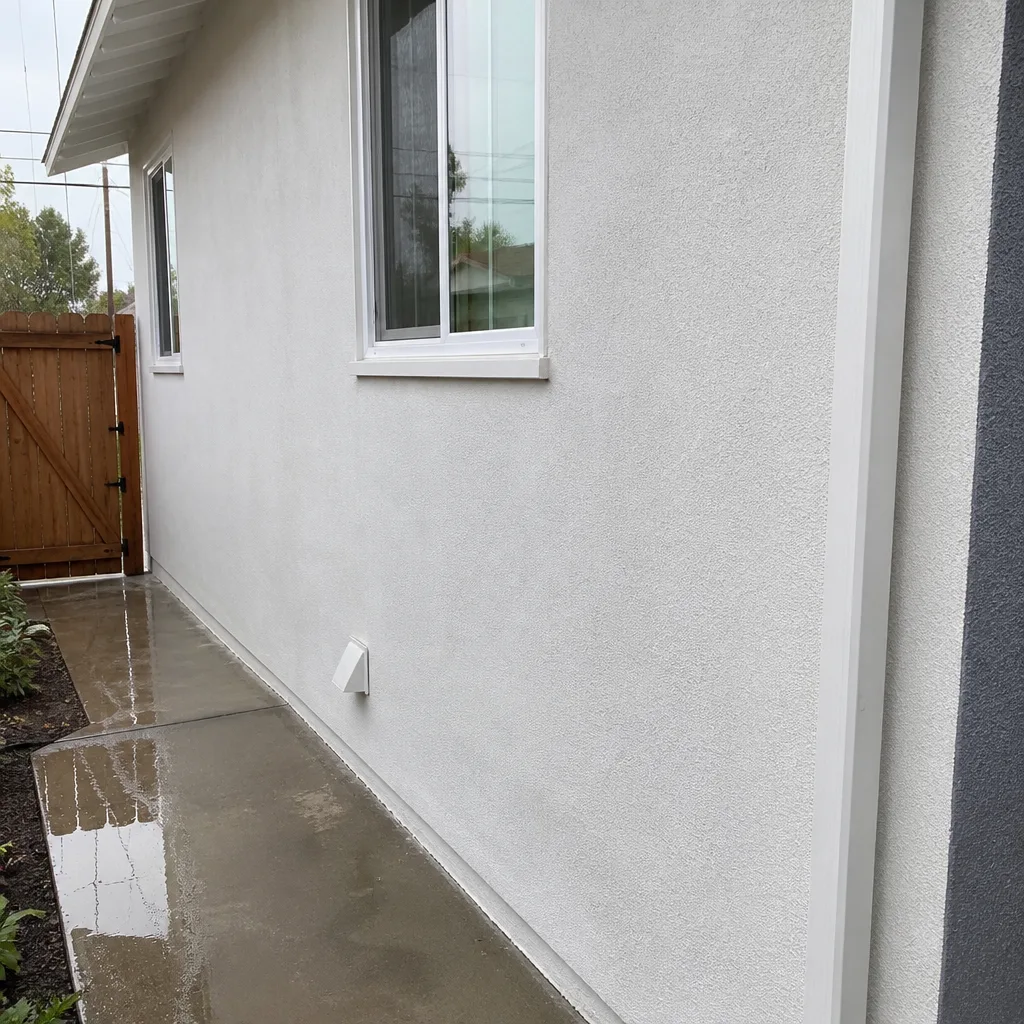
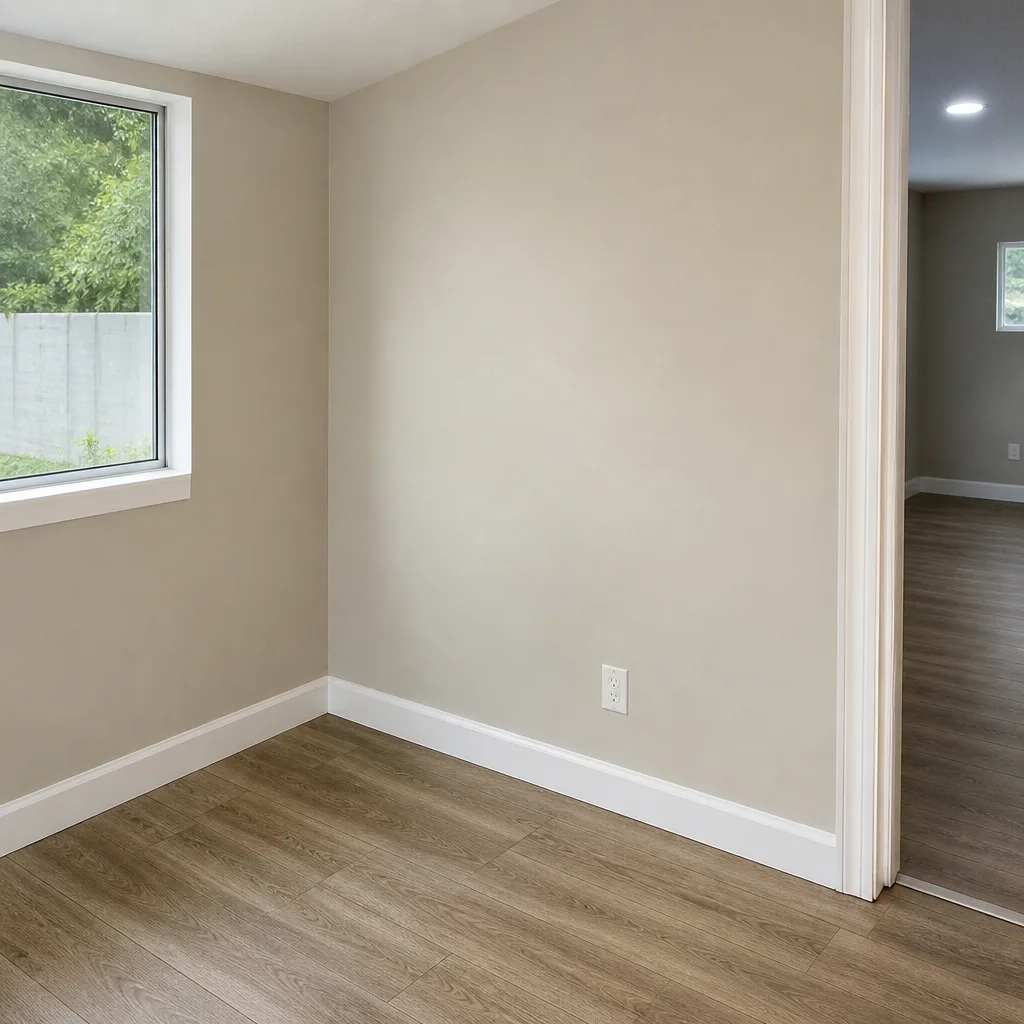
See the difference
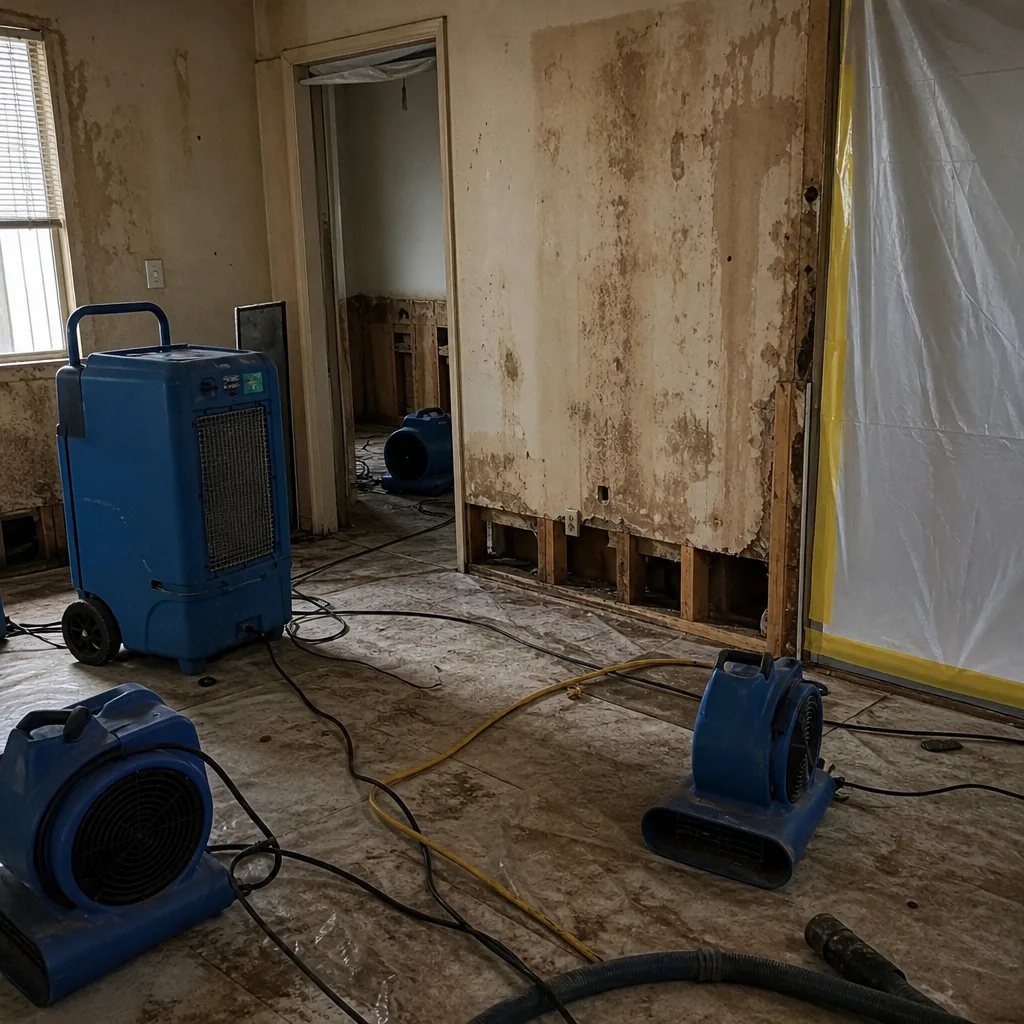 Before
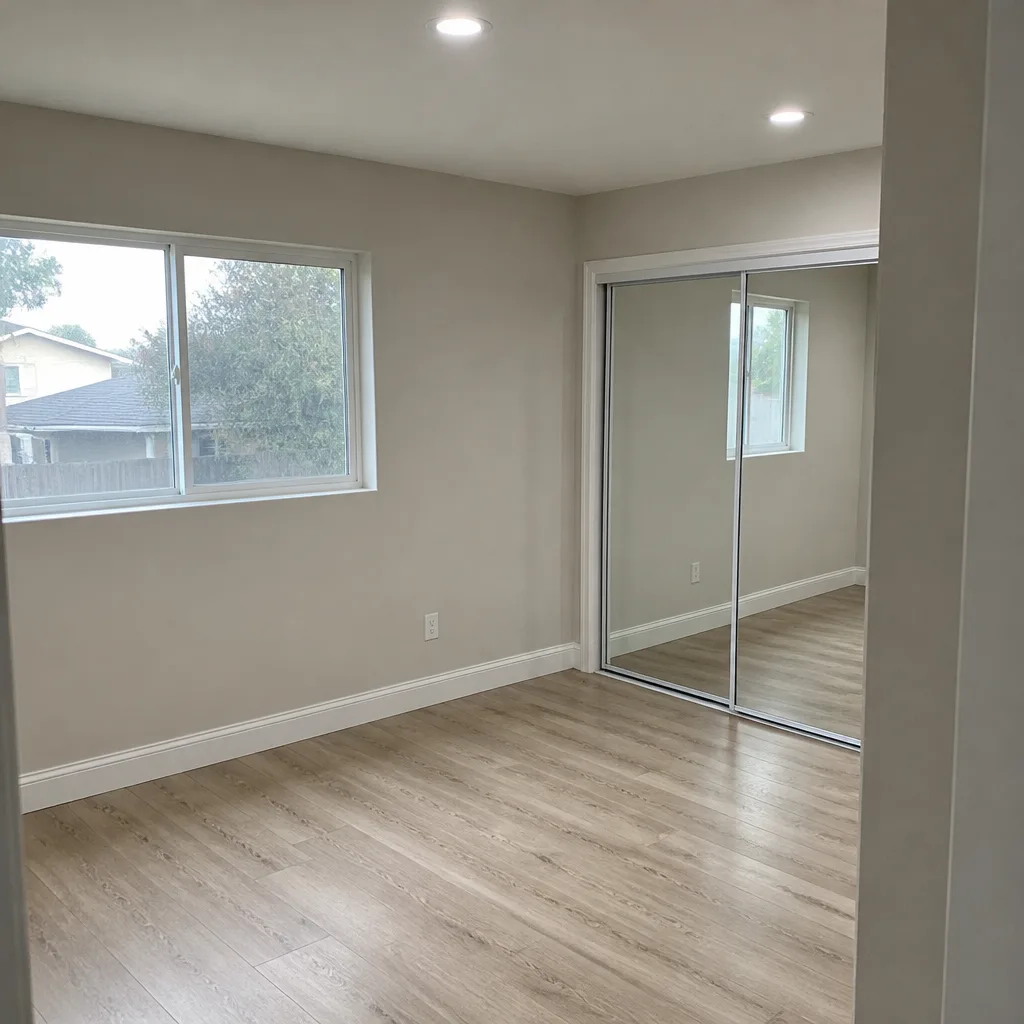 After
After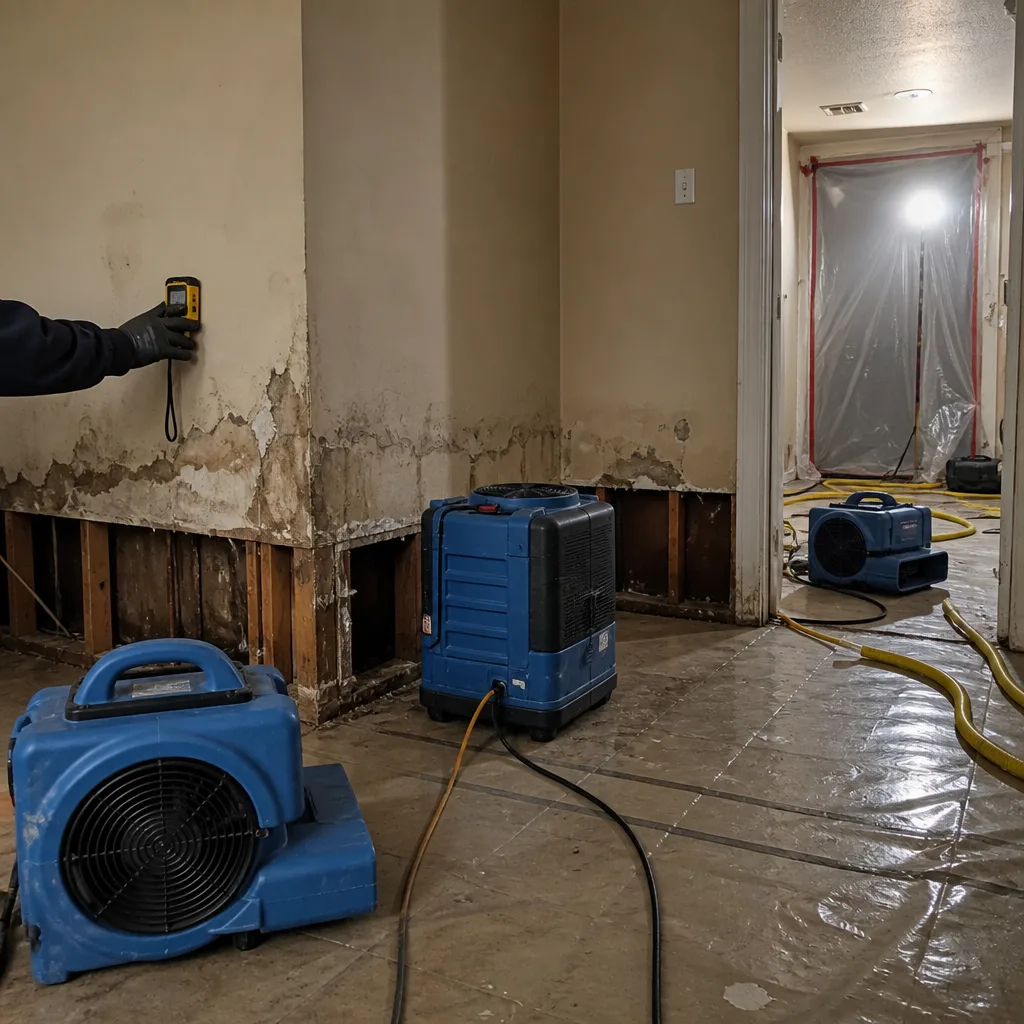 Before
 After
After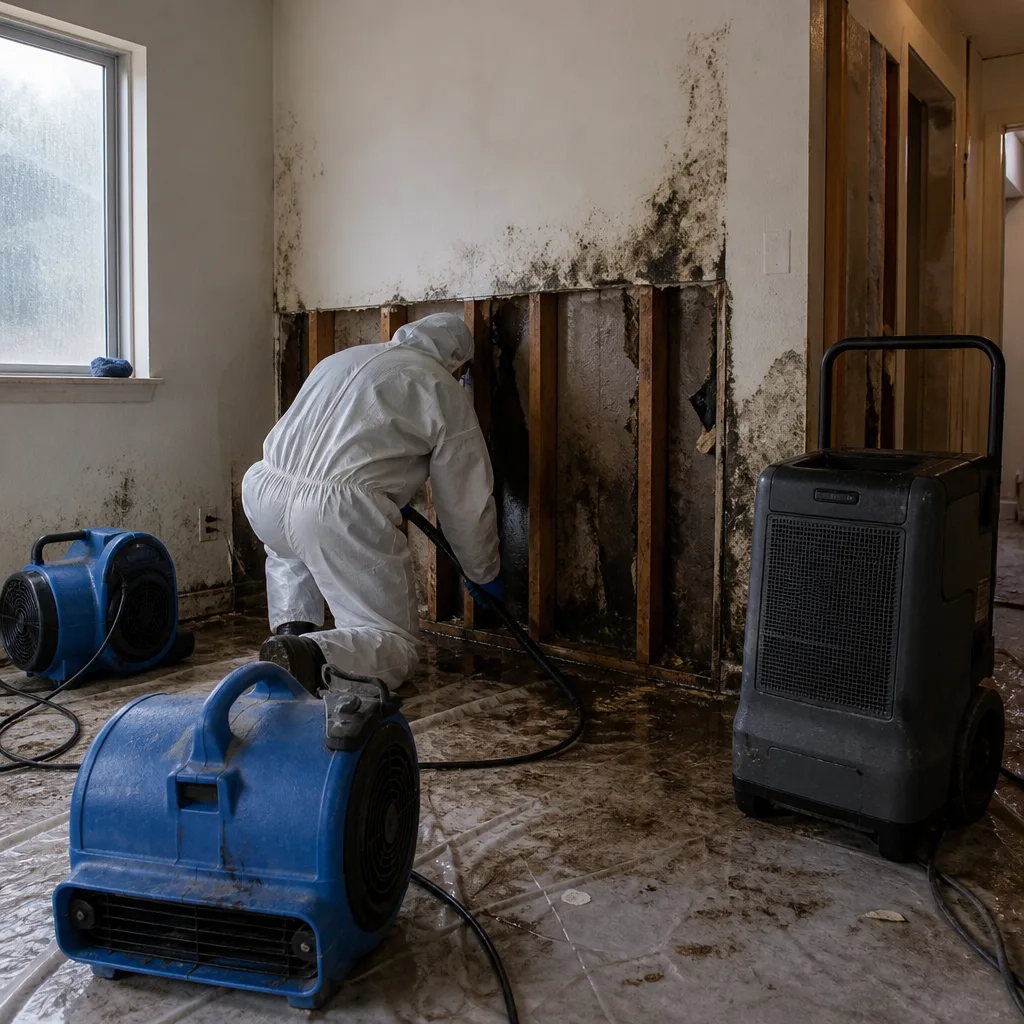 Before
 After
AfterWhen to Call a Professional
Some situations should not wait for a scheduled inspection. Call for professional help immediately if you see water actively entering the house during a storm, if you see a ceiling bulging downward with water weight, if you smell an electrical burning odor near a water source, or if you discover mold growth that covers more than 10 square feet. These are active failures, not deferred maintenance items, and every hour of delay increases the damage and the cost. Our team at Dryden Restoration Los Angeles home service is available to talk through what you’re seeing and whether it needs immediate response. We’ll give you a straight answer over the phone, and if you need us on site, we’ll name a window and hit it. Dryden Restoration Los Angeles offers free estimates in Los Angeles, call (213) 423-6383.
Frequently Asked Questions
A roof inspection in Los Angeles typically costs $150 to $300 for a standard single-family home, with additional charges for two-story homes, steep roof pitches, or properties with difficult access. The cost is worth it before winter because it catches flashing failures, cracked tiles, and deteriorated seals while they’re still cheap to repair. Call (213) 423-6383 if you’d like a recommendation for roof assessment before the rainy season.
Most California homeowner policies cover sudden and accidental water damage from storm events, but coverage often excludes damage caused by gradual leaks, lack of maintenance, or pre-existing conditions. Photo documentation of the damage and a professional inspection that identifies the specific cause are critical for the claim. If you’re uncertain about whether your damage qualifies, call us at (213) 423-6383 and we’ll help you understand what the insurance company will look for.
We aim for same-day response during active storm events in Los Angeles, and a live person answers the phone 24 hours a day, 7 days a week. The first priority is stopping the water at the source, then beginning drying as quickly as possible, because water moves through building materials at roughly an inch per hour and every hour of delay increases the scope of the restoration. Call (213) 423-6383 the moment you see water coming in.
For visible mold patches smaller than 10 square feet on non-porous surfaces, you may be able to clean it yourself with the right products and proper ventilation. For anything larger, or for mold on drywall, insulation, or other porous materials, professional remediation is the safer choice because disturbing the growth without proper containment spreads spores through the house. If you’re unsure, call (213) 423-6383 and describe what you’re seeing. We’ll give you a straight answer over the phone.
In our experience serving Los Angeles since 2005, roof flashing failure around chimneys and skylights is the most common entry point for water damage during atmospheric river events. The flashing, which seals the joint between the roofing material and the vertical structure, dries out and cracks during the long dry season and then fails when the first heavy rain arrives. The fix in October costs a few hundred dollars; the damage in January costs thousands.
Every job we complete includes a written guarantee: if a covered repair fails within one full year, we return and make it right at no charge. It’s documented on the job, not a verbal promise, and it means the repair you paid for either holds up or we come back. No fine print, no prorating, no argument. Call (213) 423-6383 for a free estimate and a written price before any work begins.
The Bottom Line
Los Angeles doesn’t ask you to do year-round maintenance. It asks you to do two focused waves: a September to October pre-rain preparation and a May heat-season check, with simple monthly observations in between. Spend $650 to $1,400 per year on professional inspections and maintenance, complete the five pre-rain checks every fall, and keep an eye on the specific failure points that match each season. The alternative is paying 10 times that for emergency restoration because a $300 fix was deferred. Carl Brandt and the team at Dryden Restoration Los Angeles have seen every category of seasonal damage this city can produce, and we’ve built our business around the specific commitments that make the process less painful: a written price before work starts, a named arrival window, and a written guarantee that actually means what it says.
Written by Carl Brandt, Owner at Dryden Restoration Los Angeles, serving Los Angeles since 2005.