
Last updated October 16, 2026
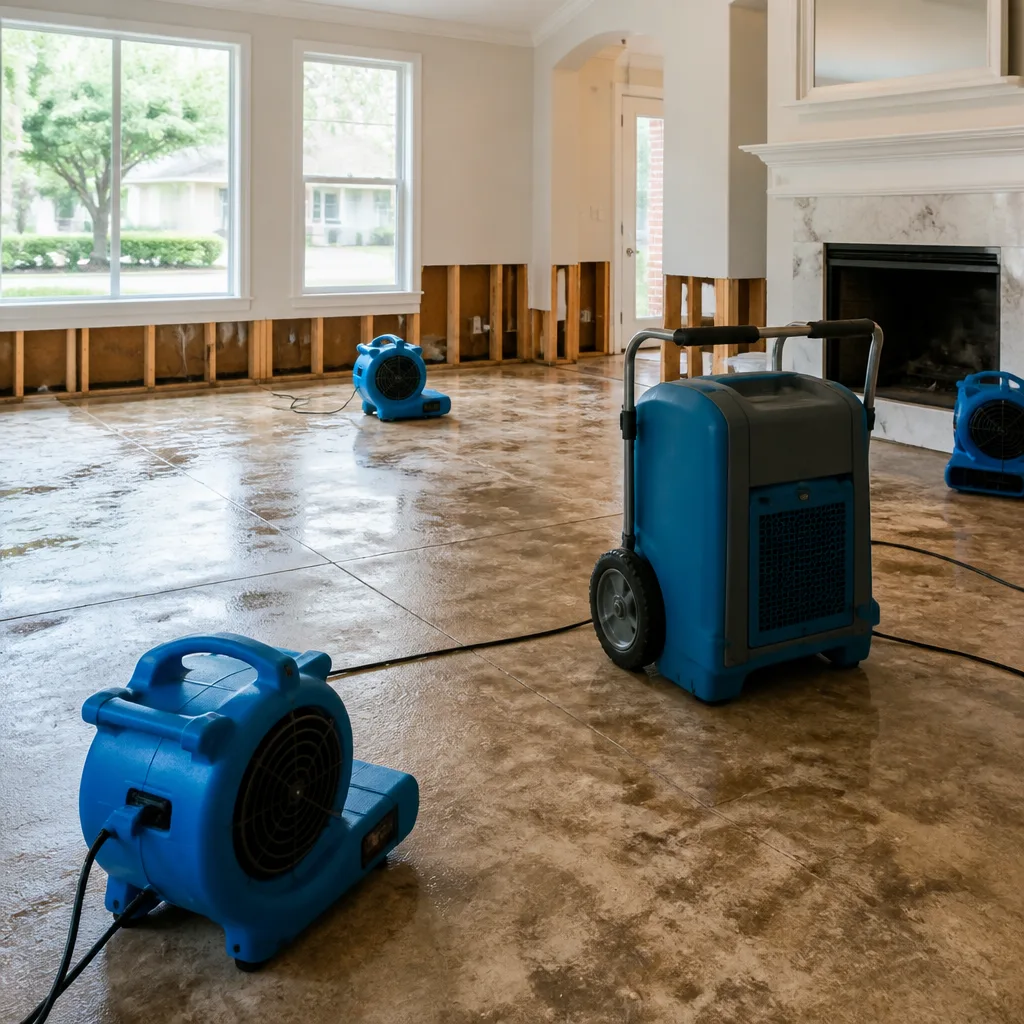 Water damage drying
 Fire & smoke cleanup
 Mold remediation
 Storm response
 Sewage cleanup
 Reconstruction
Free visual inspection and a written scope of work before any mitigation begins - photos, moisture readings, and drying logs go in your claim file
The scope we write is the scope we bill. Anything new gets shown to you, in writing, before we touch it.
Get your free estimateHow to Hire a Damage Restoration Contractor in Los Angeles: A Step-by-Step Guide
Damage restoration is one of the few purchases you’ll make when you’re at your worst: standing in water, smelling smoke, or watching mold spread across a wall. When that happens, the impulse to hire the first person who answers the phone is strong. But here’s the uncomfortable truth about the Los Angeles restoration market: after any storm, sewage backup, or fire season event, out-of-state crews and unlicensed operators flood the city within days. They work the affected neighborhoods hard, collect deposits, and leave before warranty claims come due. This Complete Guide to Damage Restoration in Los Angeles covers what we’ve learned in twenty years of doing restoration work here: what to check, what to ask, and what to refuse to accept, all before you sign anything.
Quick Answer
To hire a damage restoration contractor in Los Angeles, verify their California contractor’s license on the CSLB website (a C-33, B-General, or specialty license is required), get a written estimate that itemizes every line item before work starts, ask whether they handle insurance directly or through an assignment of benefits, and confirm they use professional-grade drying equipment. A legitimate Los Angeles restoration company will show you its license number, put its price in writing, and give you time to decide. Then call a few companies and compare what each one actually put on paper.
Restoration work we handle
Table of Contents
- Step 1: Verify the Contractor’s License (It Takes Two Minutes)
- Step 2: Demand a Written Estimate With These Specific Line Items
- Step 3: Understand Insurance, Assignments of Benefit, and Who Gets Paid
- Step 4: Ask About Drying Equipment and Certification Standards
- Step 5: The Five-Minute Phone Screen Before You Invite Anyone Over
- Step 6: Spot the Red Flags That Follow Los Angeles Storms and Fires
- Step 7: What to Expect After You Hire: The First 48 Hours
Step 1: Verify the Contractor’s License (It Takes Two Minutes)
California law requires any contractor performing damage restoration work on a residential property to hold a valid contractor’s license issued by the Contractors State License Board, called the CSLB. For restoration, the relevant license classes are C-33 (painting and decorating, which can cover finish work after restoration), B-General (broad coverage including structural repair), or a specialty class tied to the specific trade involved, such as C-54 for tile or C-36 for plumbing. A legitimate Los Angeles restoration company will list its license class and number on its website, its trucks, and its paperwork. If the number is not visible, ask for it. If they hesitate, that’s your answer.
Verifying a license takes less than two minutes. Go to the CSLB website, type in the company name or license number, and confirm three things: the license is active, it’s in the same name as the company you’re talking to, and there are no pending disciplinary actions. The CSLB also logs complaints by company name. Searching a restoration contractor’s name before you sign takes 90 seconds and has saved some Los Angeles homeowners tens of thousands of dollars. Do it every time, even if the contractor came highly recommended. We tell our own customers to look us up. A company that invites verification is a company that expects to be checked.
Step 2: Demand a Written Estimate With These Specific Line Items
In California, a written estimate for restoration work is not a courtesy. It’s a legal document that binds the contractor to a price, and it must contain enough detail that you can understand exactly what you’re paying for. What often happens in the chaos of a water loss or fire cleanup is that a contractor hands over a one-page summary with a single lump-sum number and calls it an estimate. That is not an estimate. That’s an invoice waiting to be inflated.
Here’s what a legitimate written estimate in Los Angeles should include, line by line:
- The specific rooms affected, with square footage for each. If the estimate says “water damage, first floor,” ask them to write down which rooms, what materials are wet, and what gets removed.
- Labor hours and rates, separated by technician and broken out by the hour. Not “labor: $4,200.” You want the number of hours and the hourly rate.
- Equipment rental or usage fees, listed per machine per day. A professional drying job might use three air movers and two dehumidifiers for four days. You should see those units on the estimate.
- Materials, with quantities. Drywall, baseboard, insulation, paint, flooring. If it’s getting replaced, it goes on the quote.
- Demolition and disposal costs, including dumpster fees and hauling. In Los Angeles, debris disposal costs vary significantly by landfill and by neighborhood access, and some contractors bury this cost or leave it open-ended.
- Permits, if any structural work is required. The Los Angeles Department of Building and Safety has specific permit requirements for structural repairs, and the estimate should state who pulls the permit and who pays for it.
- Any subcontractor work, with the subcontractor’s name, license number, and scope. If a contractor plans to hire a plumber or electrician, that person must be separately licensed, and you have the right to see that license before work starts.
- A written start date and a written completion date, or at minimum an estimated number of days from start to finish. Vague language like “as soon as possible” does not belong in a contract.
We operate on a simple principle: the price gets written down before any tool gets touched. We write the number, we sign it, and we don’t change it at the door. The 365-Day Done Right Promise means if a covered repair fails within a full year, we come back and make it right at no charge. That promise is written on every job, not spoken. You should expect the same from any contractor you hire: the guarantee in writing, not as a verbal assurance.
Step 3: Understand Insurance, Assignments of Benefit, and Who Gets Paid
Most restoration work in Los Angeles involves a homeowner’s insurance policy. The way the payment works usually falls into one of two arrangements. In the first, the homeowner pays the contractor directly and then seeks reimbursement from the insurer. In the second, called an assignment of benefits, the homeowner signs a document transferring their right to collect the insurance payout directly to the contractor. The contractor then bills the insurance company and collects the funds.
Assignments of benefit are common and can be legitimate, but they’re not neutral. When you sign one, you give up control of the claims process. The contractor is now the insured party for that claim, and you’re on the sidelines. Some contractors push assignments of benefit hard because they know the insurer will pay out faster and with less pushback when a professional company submits the paperwork. But some use them to inflate the scope of work. Ask a direct question: “Do you require an assignment of benefit, or can I pay you directly and handle my own claim?” Any contractor who refuses to work without an assignment of benefit is telling you something about who they serve.
There’s a third path, which is the one we use when the situation allows: photo-documented assessments and direct coordination with your adjuster. We take pictures of everything, write a scope, and communicate with the insurance company on your behalf, but you remain in control of the claim. You get to see every line item and every photo before anything gets submitted. In Los Angeles, where water damage claims frequently involve hidden moisture in stucco and plaster walls, photo documentation is what separates a covered claim from a denied one.
Step 4: Ask About Drying Equipment and Certification Standards
Water damage restoration is only as good as the equipment used to dry the structure. You can stand in a flooded room with a fan and a prayer, but that’s how you get mold three weeks later. Professional restoration companies use commercial-grade machines built for the job. In Los Angeles, where summer humidity and older construction combine to trap moisture inside walls, the equipment matters more than most homeowners realize-see our Water Damage Restoration Maintenance Checklist for Los Angeles Homeowners for what to monitor.
Ask a contractor what machines they’ll use and why. A professional answer sounds something like this: “We’ll set up Dri-Eaz dehumidifiers to pull moisture from the air, Phoenix air movers to create airflow across the wet surfaces, and we’ll take moisture readings with a penetrating meter to monitor progress daily.” That answer tells you two things: they use professional equipment, and they know how to measure whether it’s working. Our fleet includes Dri-Eaz, Phoenix, and B-Air systems, all of which are built for continuous operation over several days, not an afternoon. These are the same machines used on large commercial restoration jobs. The difference in a home is that someone has to monitor them and adjust the drying plan as readings change.
Certifications matter too. The restoration industry’s recognized benchmarks are set by the IICRC, the RIA, and the IFA. IICRC is the Institute of Inspection, Cleaning and Restoration Certification, and its standards govern how water extraction, drying, and mold remediation should be performed. RIA is the Restoration Industry Association, which focuses on ethics and professional conduct. IFA is the International Flood Association, relevant for floodplain work. A contractor who trains to these standards has a defined process for the work. Ask which standards they follow. If the answer is a shrug, move on.
Step 5: The Five-Minute Phone Screen Before You Invite Anyone Over
You can pre-screen a restoration contractor in Los Angeles in under five minutes before they ever step foot on your property. This matters because once a contractor is in your living room with a moisture meter in hand, the sales pressure changes. The phone call is your most powerful filter, and it costs you nothing. Here’s a script we’ve suggested to customers over the years. It works.
- “Can I get your California contractor’s license number? I’ll check it on the CSLB website before we set a time.” A legitimate contractor recites it from memory or pulls it up instantly. Anyone who stumbles or says they’ll “get it to you later” just failed the test.
- “Will you give me a written estimate before any work starts, with line items for labor, equipment, and materials?” The answer must be yes, without qualification. If they say “we give you a rough number and finalize it as we go,” end the call.
- “What drying equipment do you use?” You’re listening for brand names and a description of the drying plan. A professional says “Dri-Eaz dehumidifiers and air movers, monitored daily with moisture meters.” A hack says “fans.”
- “Do you require an assignment of benefit, or can I pay directly and handle my insurance claim myself?” You want the option. If they require an assignment of benefit, you should know why before you agree to it.
- “Who, specifically, will be doing the work? Are your technicians employees or subcontractors?” In Los Angeles, many restoration crews are day laborers hired by the job, with no background checks and no uniform. A legitimate company sends background-checked, uniformed technicians who work for the company. You should know who will enter your home before you open the door.
Five questions. Five minutes. You’ll eliminate most of the worst operators in Los Angeles without ever leaving your kitchen. At Dryden, every technician who enters a home has passed a background check and wears a Dryden uniform. You know who you let in. That should be the norm, not the exception.
Step 6: Spot the Red Flags That Follow Los Angeles Storms and Fires
The Los Angeles restoration contractor market has a seasonal problem. After any significant rain event, mudslide, or fire-season surge, unlicensed operators and out-of-state storm chasers appear in affected neighborhoods. They knock on doors. They leave flyers. They offer “free inspections” that turn into hard-sell pitches. Some of them do decent work. Many of them disappear. Here are the specific red flags we’ve seen in Los Angeles over the years.
- Out-of-state plates on a work truck. A legitimate Los Angeles restoration company operates out of Los Angeles. Storm chasers drive in from Nevada, Arizona, or Texas, work a few weeks, and leave. Ask where the company is based. Check the address on the license.
- Door-to-door solicitation after a storm or fire event. California law restricts unsolicited door-to-door contracting in many circumstances, and reputable restoration companies in Los Angeles don’t operate this way. If someone knocks on your door the day after a flood and offers to “get you started right now,” close the door.
- Pressure to “start drying tonight” without a written price. Speed matters in water damage, yes. But a contractor who won’t put a number on paper before starting work is using the emergency as leverage. The moisture will still be there in two hours. Get the price in writing first.
- Demanding a large deposit before any work starts. In California, a contractor may not demand more than 10% of the total contract price or $1,000, whichever is less, as a down payment for home improvement work over $500. Restoration work falls under this rule. Anyone demanding more is breaking the law.
- No written guarantee, or a guarantee that’s only verbal. Verbal guarantees are worth the air they’re spoken into. A real Los Angeles restoration company puts its warranty in writing, with specific terms for what’s covered and for how long. If they won’t write it down, they don’t intend to honor it.
- Asking you to sign a blank or incomplete contract. Some operators hand over a contract with empty lines for the price or the scope. Never sign a blank document. If the number isn’t there, don’t sign.
- No photos before demolition. A professional restoration company documents the damage before removing anything. If a contractor plans to tear out drywall or flooring without taking photos first, you may have no evidence for your insurance claim. Photo documentation should be automatic, not something you have to request.
Step 7: What to Expect After You Hire: The First 48 Hours
Once you’ve verified the license, got the written estimate, and signed the contract, here’s what a professional restoration job in Los Angeles should look like in the first two days. This is what we do on every job, and what you should expect from anyone you hire.
Day one: assessment and documentation. The crew arrives during the window you were given, in uniform, with identification. They walk the property with you, identify the full scope of damage, and photograph everything before touching anything. They take moisture readings in the walls, floors, and ceiling, and they explain what the readings mean in plain English. They confirm the written price matches the work they’re about to do. If the scope has changed since the initial estimate, they write the new scope and the new price and get your approval before proceeding. Then they start the work: water extraction, demolition, equipment setup, whatever the job requires.
Days two through four: monitoring and adjustment. Professional drying is not a set-it-and-forget-it process. A technician should return daily to check moisture readings, adjust equipment placement, and confirm the structure is drying as expected. The technical term for this is psychrometric drying, which means managing the relationship between temperature, humidity, and air movement to dry the structure efficiently. A simpler way to say it: we measure that the water is actually leaving the walls and floors, and we move machines around until it does. If daily monitoring doesn’t happen, the job isn’t being done to standard.
Completion: final walkthrough and written guarantee. When the equipment comes out and the repairs are done, the contractor should walk the property with you, show you the final moisture readings, and hand you a written guarantee. At Dryden, that’s the 365-Day Done Right Promise, and it’s on every job, in writing, with your name on it. If a covered repair fails within a year, we return and correct it at no charge. No phone tag, no arguing about whether it’s our problem. It’s in the document.
Common Mistakes to Avoid
- Hiring the first company that answers the phone. In a water emergency, the first available contractor is not necessarily the best one. Take thirty minutes to make two or three calls. A few minutes on the phone now will save you from weeks of problems later.
- Accepting a verbal estimate. If it’s not written down, it doesn’t exist. In California, a verbal estimate is not enforceable, and the contractor knows it. Demand paper, every time, before any work starts.
- Signing an assignment of benefits without reading it. You’re transferring your insurance rights. Read the document. Ask what happens if the claim is denied. Ask who pays the difference if the insurer pays less than the contractor billed. These are not rude questions. They’re the minimum.
- Skipping the license check. The CSLB website is free, it’s public, and it takes less time than reading this section. Skipping it is how homeowners in Los Angeles end up paying unlicensed operators tens of thousands of dollars with no legal recourse.
- Letting a contractor start “emergency” work without a signed contract. Emergency work still needs a written price. Even if the contractor says they’ll “figure out the details later,” get the number in writing before they touch anything. The emergency exception is not an exception to the estimate requirement.
- Not asking about the warranty in writing. A one-year guarantee sounds great until you need it and the contractor can’t remember promising it. Get the guarantee in writing, with terms. At Dryden Restoration Los Angeles home, the 365-Day Done Right Promise is a written document on every job, because a guarantee that exists only in conversation isn’t a guarantee.
- Ignoring the red flag of no photos. If the contractor doesn’t document the damage before demolition, your insurance claim becomes a fight over what the damage actually looked like. Insist on photos. It’s your evidence.
See the difference
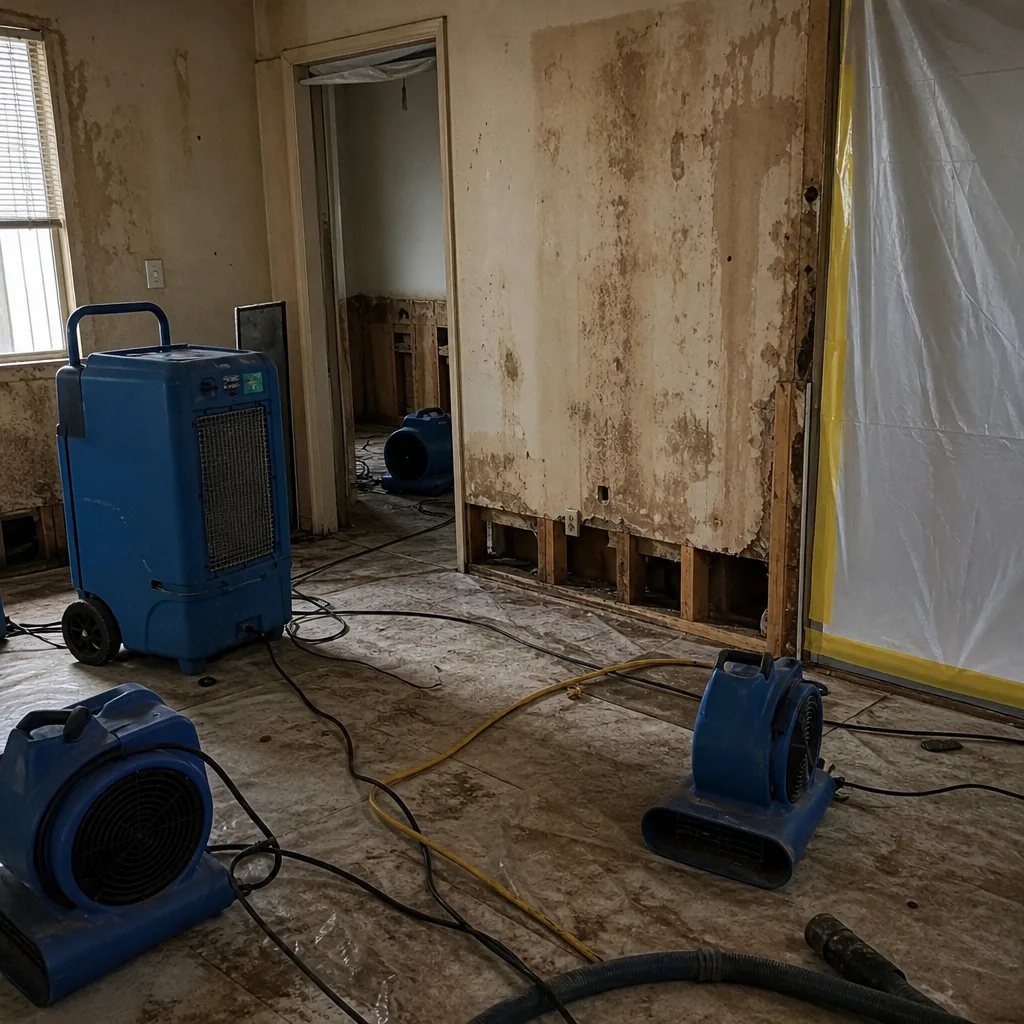 Before
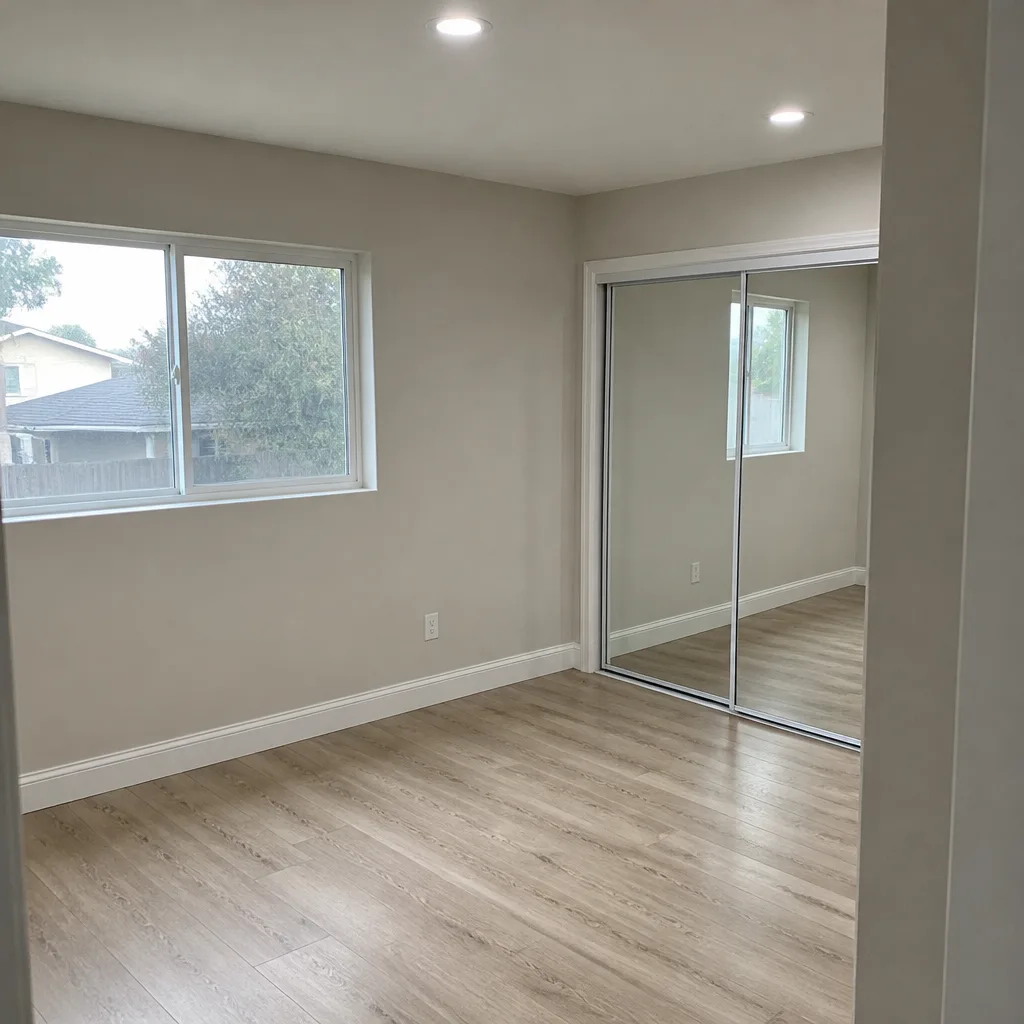 After
After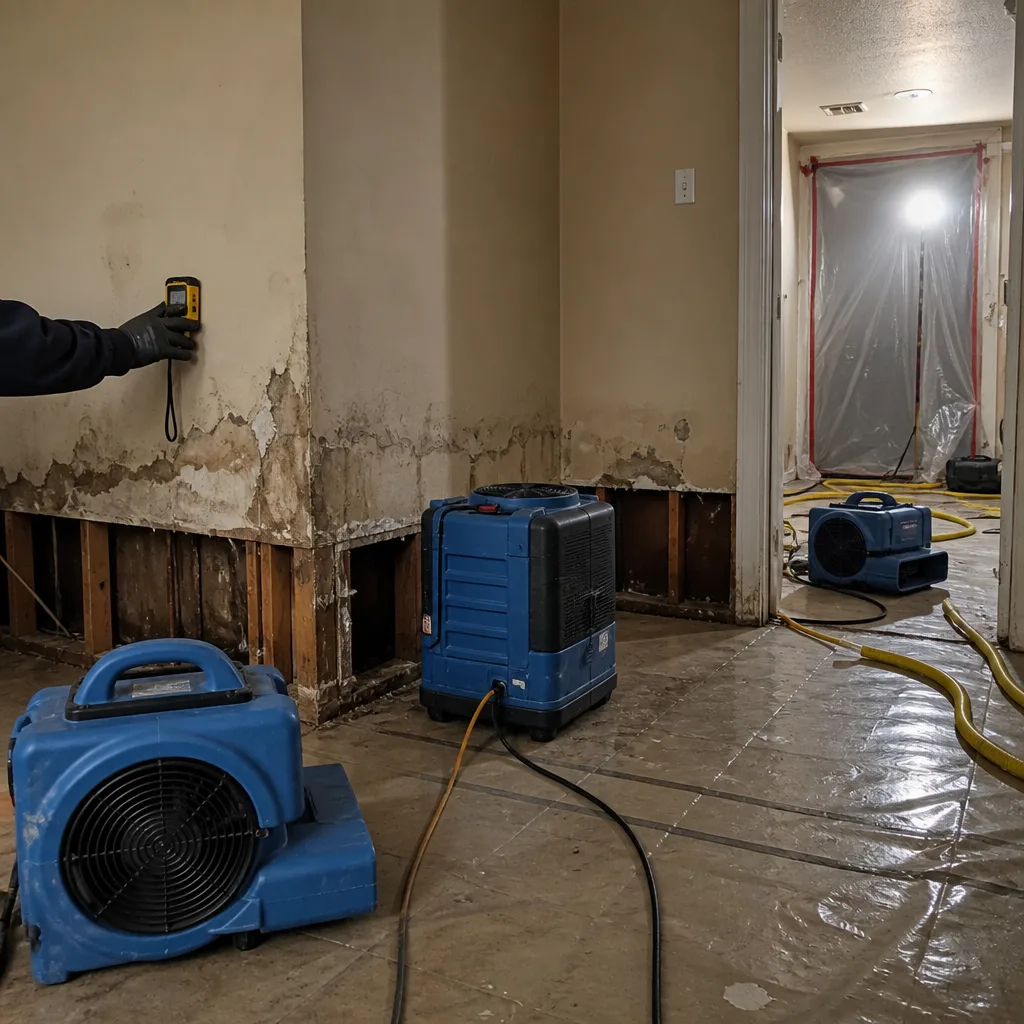 Before
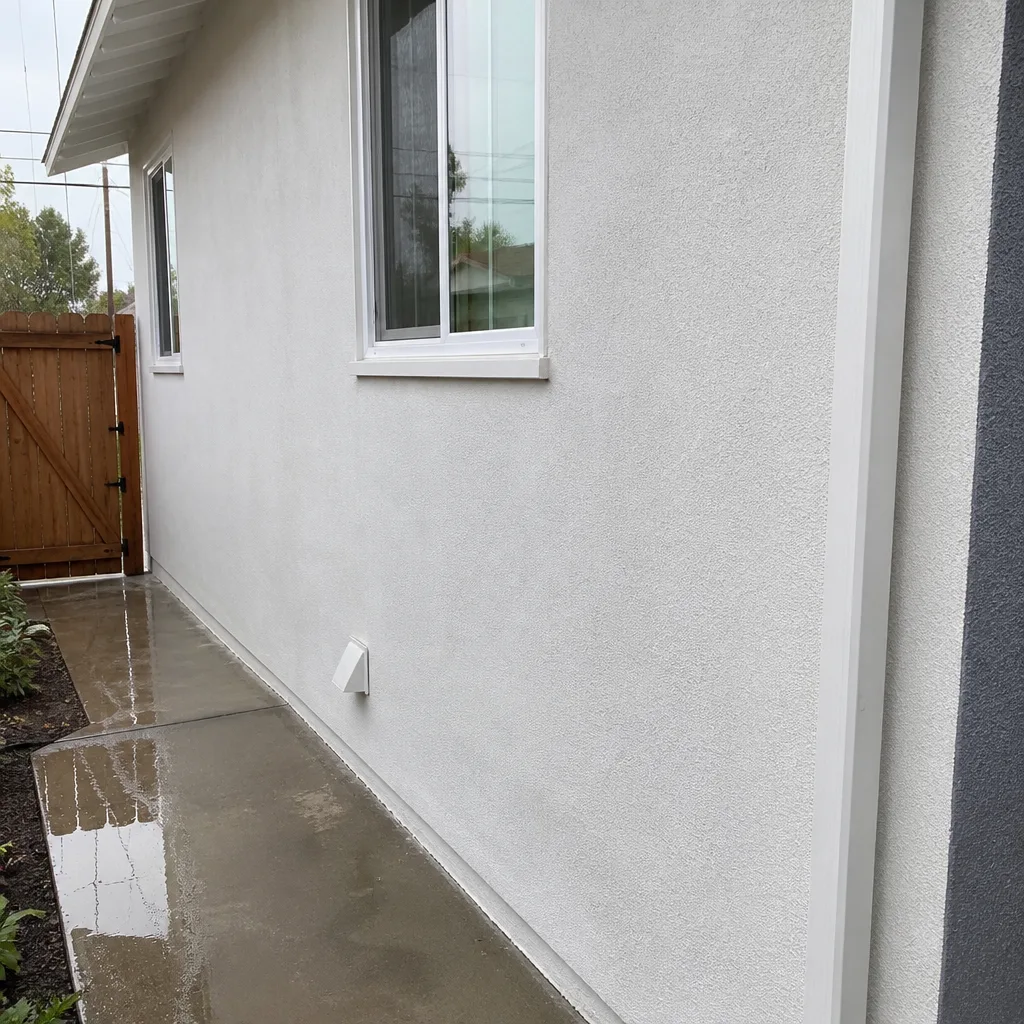 After
After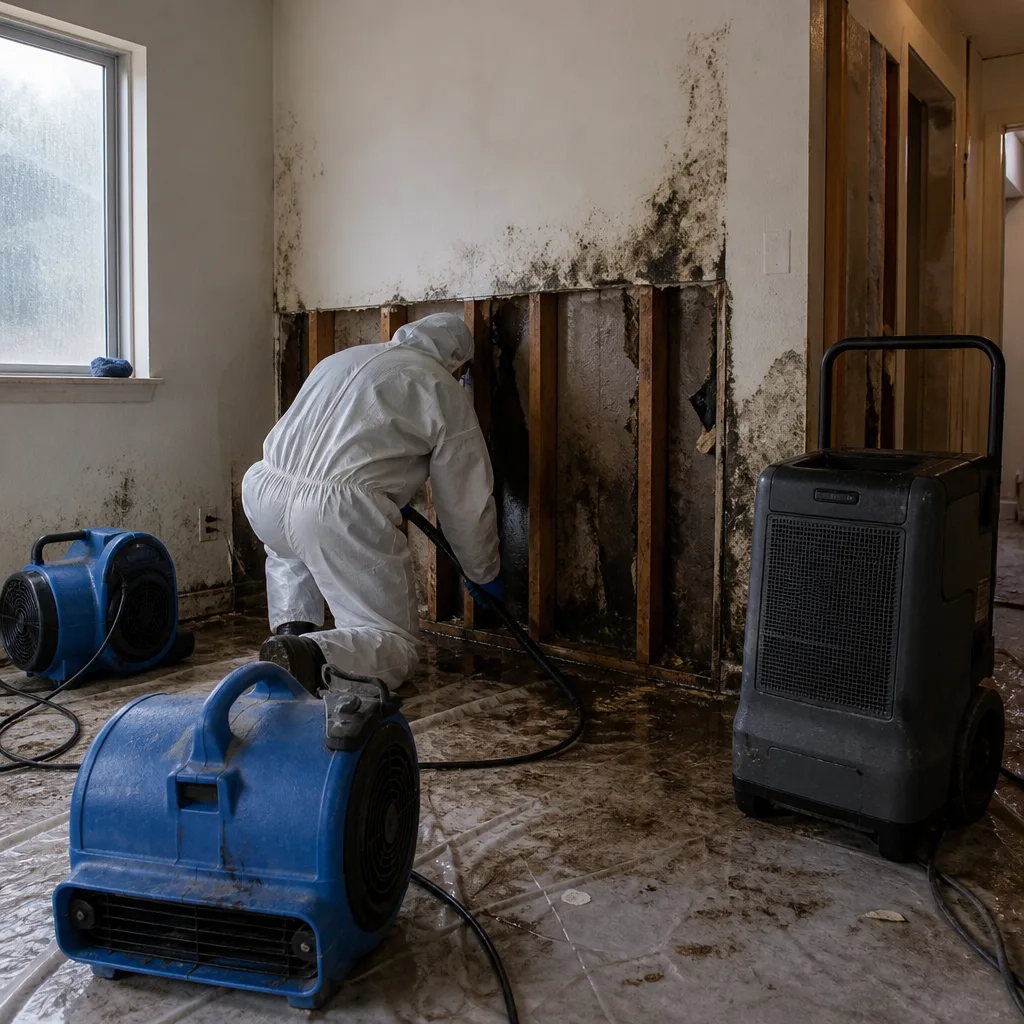 Before
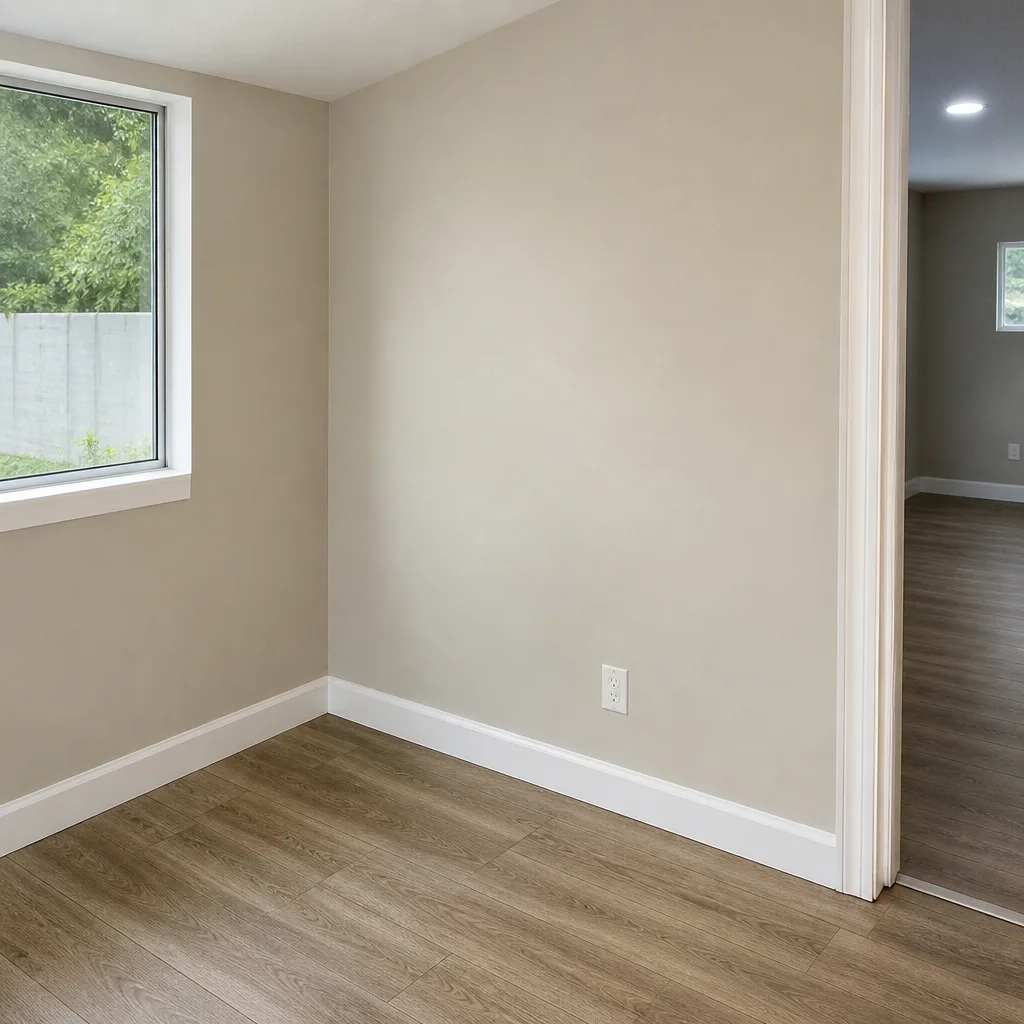 After
AfterWhen to Call a Professional
Some damage you can handle with a mop and a fan. Other damage requires professional equipment and professional judgment, and the line is often invisible to the untrained eye. Call a restoration contractor in Los Angeles when the water has soaked into drywall, baseboards, or flooring, when the damage covers more than a small contained area, when the water source might be contaminated (sewage, storm runoff, or floodwater), when you see mold on any porous surface, or when you’ve had a fire and the smoke odor has penetrated the walls and contents. You should also call if the damage happened more than 48 hours ago and the area still feels damp. Dryden Restoration Los Angeles offers free estimates in Los Angeles. Call (213) 423-6383 and we’ll come out, assess the damage, and put a price in writing before any work begins.
Frequently Asked Questions
Go to the Contractors State License Board website, enter the contractor’s name or license number, and confirm the license is active, matches the company name, and shows no major disciplinary actions. The CSLB also logs complaints by company name, and the search takes less than two minutes. Acceptable license classes for restoration work in California include C-33, B-General, or a specialty class matching the specific trade.
Water damage restoration in Los Angeles typically ranges from $2,500 to $8,000 for a moderate single-room water loss, including extraction, drying equipment, and minor repairs. Larger losses involving multiple rooms, structural drying, and full reconstruction can run $15,000 to $40,000 or more. The final number depends on the square footage affected, the category of water (clean, gray, or black), the materials involved, and how quickly the drying process started. Call (213) 423-6383 for a written estimate on your specific situation.
Most Los Angeles homeowner’s policies cover sudden and accidental water damage, such as a burst pipe or an appliance overflow, but they typically exclude gradual leaks, neglect, and flood damage from external sources. Sewage backup and mold remediation may be covered or excluded depending on your specific policy and endorsements. The best way to find out is to call your insurer, document everything with photos before demolition, and ask your restoration contractor to coordinate directly with your adjuster. At Water Damage Restoration in Los Angeles, we document every job with photos and coordinate directly with insurance carriers.
For water damage, a Los Angeles restoration company should be able to start mitigation within 24 to 48 hours of your call, and sooner for active leaks or sewage backups. We answer every call with a live person, 24 hours a day, 7 days a week, and we’ll give you a named arrival window when you call, not a vague “sometime today.” For mold and fire damage, the timeline is typically a few days for assessment and written scope, since those jobs require more planning and permit coordination. Call (213) 423-6383 and we’ll tell you exactly when we can be there.
Water mitigation is the emergency phase: stopping the water source, extracting standing water, setting up drying equipment, and preventing secondary damage. Water damage restoration is the rebuild phase: replacing drywall, flooring, baseboards, and paint, and returning the home to its pre-loss condition. Both phases should be covered by the same written estimate, and the same contractor should handle both, so there’s one point of accountability and one written guarantee.
If the mold covers less than ten square feet on a non-porous surface like tile, you can often clean it yourself with soap and water. If the mold is on drywall, insulation, carpet, or wood, or if it covers more than ten square feet, you need professional remediation. Mold in porous materials roots into the structure, and surface cleaning does not remove it. Professional Mold Remediation in Los Angeles involves containment, HEPA filtration, removal of affected materials, and post-remediation verification that the spore count has dropped to normal levels.
That depends on what you arrange with the contractor. Some Los Angeles homeowners prefer to handle the insurance process themselves and have the contractor provide documentation. Others have the contractor coordinate directly with the adjuster, submitting photos, moisture readings, and the written scope. A third arrangement is an assignment of benefits, where you transfer your claim rights to the contractor. We recommend keeping control of your claim while we document and coordinate on your behalf. That way you see everything before it gets submitted.
The Bottom Line
Hiring a damage restoration contractor in Los Angeles comes down to four verifiable checkpoints: a valid California contractor’s license, a written estimate with line items before work starts, a clear arrangement for insurance payment, and professional equipment with a defined drying plan. None of these require special knowledge. All of them take less than an hour combined. The companies that pass all four are the ones that will show up, do the work at the price they quoted, and stand behind it. At Fire Damage Restoration in Los Angeles and across all our restoration work, we put our price in writing, our guarantee in writing, and our name on the door. That’s the standard. Hold every contractor to it.
Written by Carl Brandt, Owner at Dryden Restoration Los Angeles, serving Los Angeles since 2005.