
 Water damage drying
 Fire & smoke cleanup
 Mold remediation
 Storm response
 Sewage cleanup
 Reconstruction
Free visual inspection and a written scope of work before any mitigation begins - photos, moisture readings, and drying logs go in your claim file
The scope we write is the scope we bill. Anything new gets shown to you, in writing, before we touch it.
Get your free estimateFast, Reliable Water Damage Restoration Across Echo Park
Water damage in Echo Park moves fast, and the hills here make it worse. Sun-baked clay soil turns slick during winter storms, sending runoff toward foundations that were poured before modern drainage codes existed. If you’re standing in water right now, call (213) 423-6383 and a live person answers, day or night. We run crews into Echo Park, Los Angeles, and know the difference between a 1920s Craftsman hillside basement and a 1960s dingbat apartment slab. That local knowledge changes how we dry your property and what we look for before we leave.
Why Dryden Restoration Los Angeles Is Echo Park’s Preferred Water Damage Restoration Company
Dryden Restoration Los Angeles has been responding to water damage since 2005 as part of the Kingswell family of independently owned restoration businesses. Carl Brandt leads the team. Every technician who arrives in Echo Park is background-checked and uniformed, so when you open the door at 2 a.m., you know exactly who you’re letting in. We work to IICRC, RIA, and IFA standards, the restoration industry’s recognized benchmarks for training and ethics.
But what matters in Echo Park is what we already know about the neighborhood. We know that hillside basements on Morton Avenue and Scott Avenue flood differently than ground-floor units on Sunset Boulevard. We know that original 1920s galvanized pipes and unpermitted hillside add-ons show up constantly here. And we know that a “clean water” assumption in this neighborhood can be wrong – a lot of Echo Park basement floods carry mud, clay, and debris. That’s the local knowledge that keeps your repair from failing in six months.
We don’t pressure anyone. The Kingswell Way is simple: say the price before the work, show up in the window we gave, leave the place cleaner than we found it, put the guarantee in writing, and come back if it fails.
Restoration work we handle
Water Extraction in Echo Park
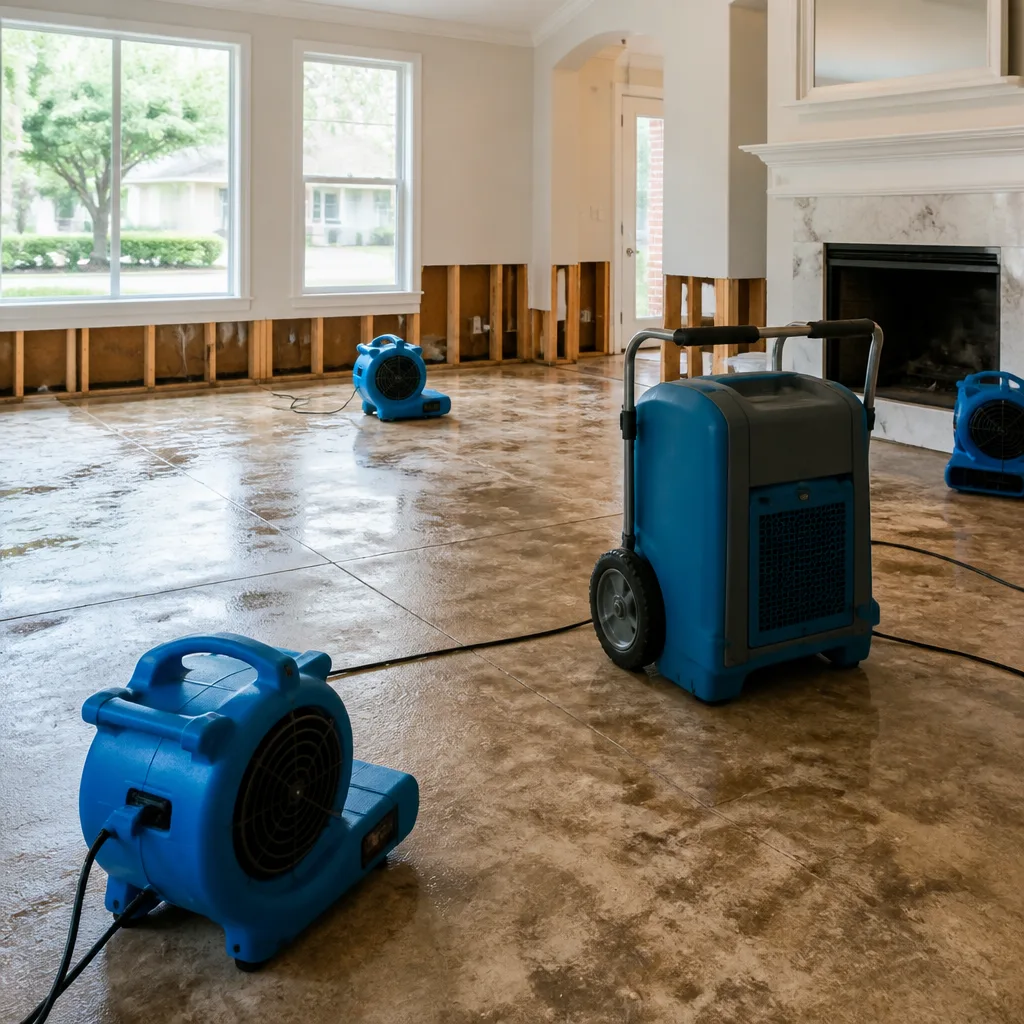
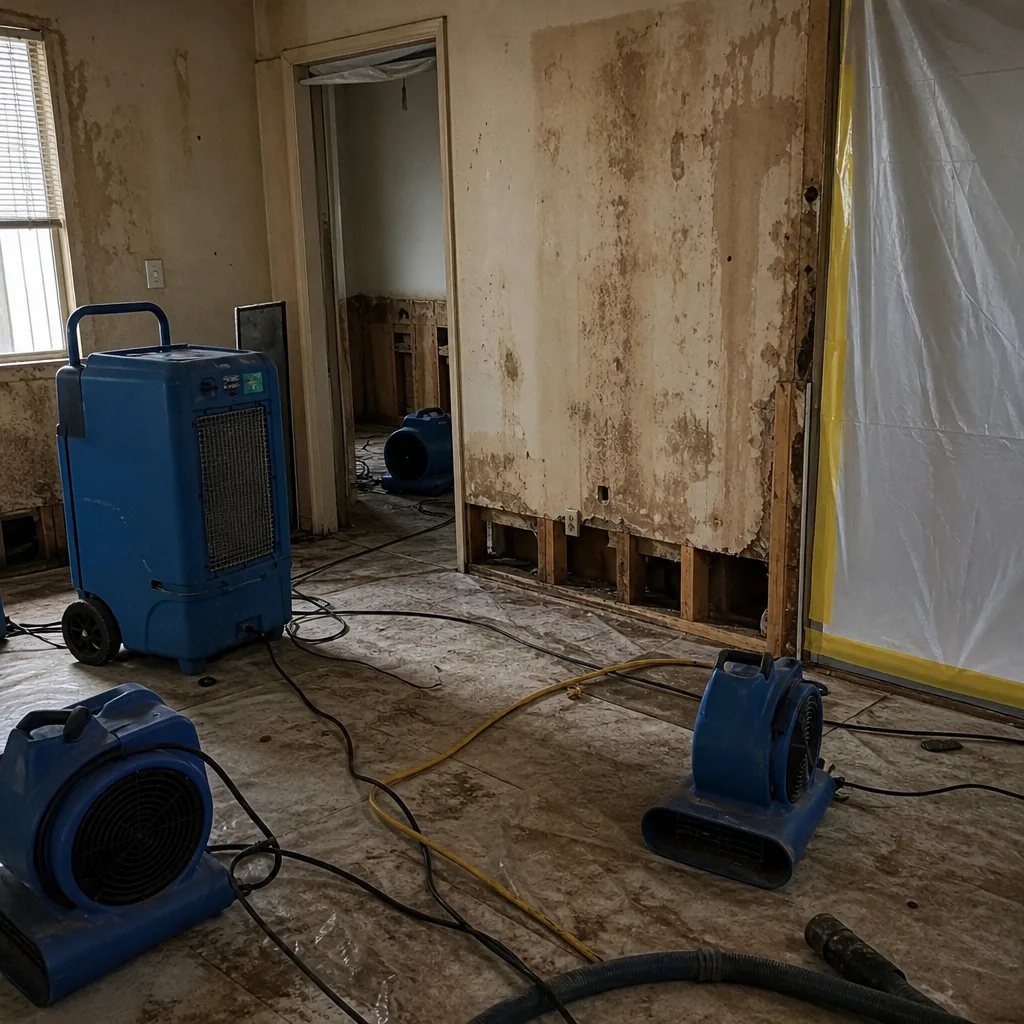
Water extraction in Echo Park is the first and most urgent step after a burst pipe, water heater failure, or hillside runoff finds its way inside. We remove standing water using professional-grade extractors, then begin mapping moisture in walls, subfloors, and the cavities beneath raised foundations. In Echo Park, extraction often means dealing with water that isn’t just water. Hillside clay, decomposed granite, and debris from unpermitted additions frequently mix into basement floods, and our crews test water category before deciding how aggressive containment and antimicrobial treatment needs to be. A typical water extraction job in Echo Park runs $350 – $800 for a single room with clean water; Category 3 contaminated extraction, common in hillside basements, runs $1,000 – $2,500 including containment and initial antimicrobial application.
Raised Foundation and Crawl Space Extraction
Echo Park’s Craftsman and Spanish Colonial Revival homes from the 1910s-30s often sit on raised foundations with shallow crawl spaces. Water pools there, wicks into joists, and keeps damaging the structure even after the floor looks dry. We run extraction pumps and low-profile dehumidifiers under these homes.
Slab and Dingbat Apartment Extraction
For Echo Park’s post-war stucco apartments and dingbats on Sunset and Alvarado, water moves laterally across concrete slabs into drywall and lower cabinetry. Extraction here means removing baseboards, drilling small weep holes, and running air movers across wall cavities. The process is faster than crawl space work, but still requires moisture mapping to know when it’s actually dry.
Emergency Water Removal in Echo Park
Emergency water removal in Echo Park is a call we answer 24 hours a day, 7 days a week, because a busted supply line at 3 a.m. in a hillside home doesn’t wait for business hours. The first hour matters most. We dispatch a crew to Echo Park neighborhoods immediately, with a named arrival window before we hang up the phone. Emergency water removal covers the initial extraction and setting up drying equipment so secondary damage doesn’t spread into hardwood, lathe-and-plaster walls, or the structural framing beneath a 1920s floor plan. You can expect to pay $450 – $1,200 for emergency response and initial extraction in Echo Park, with the final drying scope priced in writing before equipment is placed.
After-Hours and Same-Day Dispatch
A live person answers every call, even at 2 a.m. on a holiday. No voicemail, no call-back queue. We tell you the arrival window, and we hit it. For Echo Park hillside streets like Morton and Avalon, that means routing a crew that’s already stocked for Category 3 water, not a generic van.
Mitigation Before Drying
Emergency water removal isn’t finished when the puddle is gone. In Echo Park, we check the original clay sewer line, because seismic-cracked lines often turn a “simple” flood into a repeat backup. We document everything with photos and write the drying scope before more equipment moves in.
Trusted Brands We Service in Echo Park
The equipment we bring to Echo Park properties includes Dri-Eaz, Phoenix, and Injectidry systems – the same professional-grade machines used by large commercial restoration crews. Dri-Eaz dehumidifiers and air movers handle the heavy lifting on structural drying, Phoenix units give us precise psychrometric readings (that’s temperature, humidity, and dew point – the numbers that tell us your walls are actually dry, not just dry to the touch), and Injectidry pads pull water from inside wall cavities without tearing out every section of original plaster. Mixing the right machine for the right building matters here, because a 1920s lathe-and-plaster wall dries differently than 1960s drywall.
See the difference
 Before
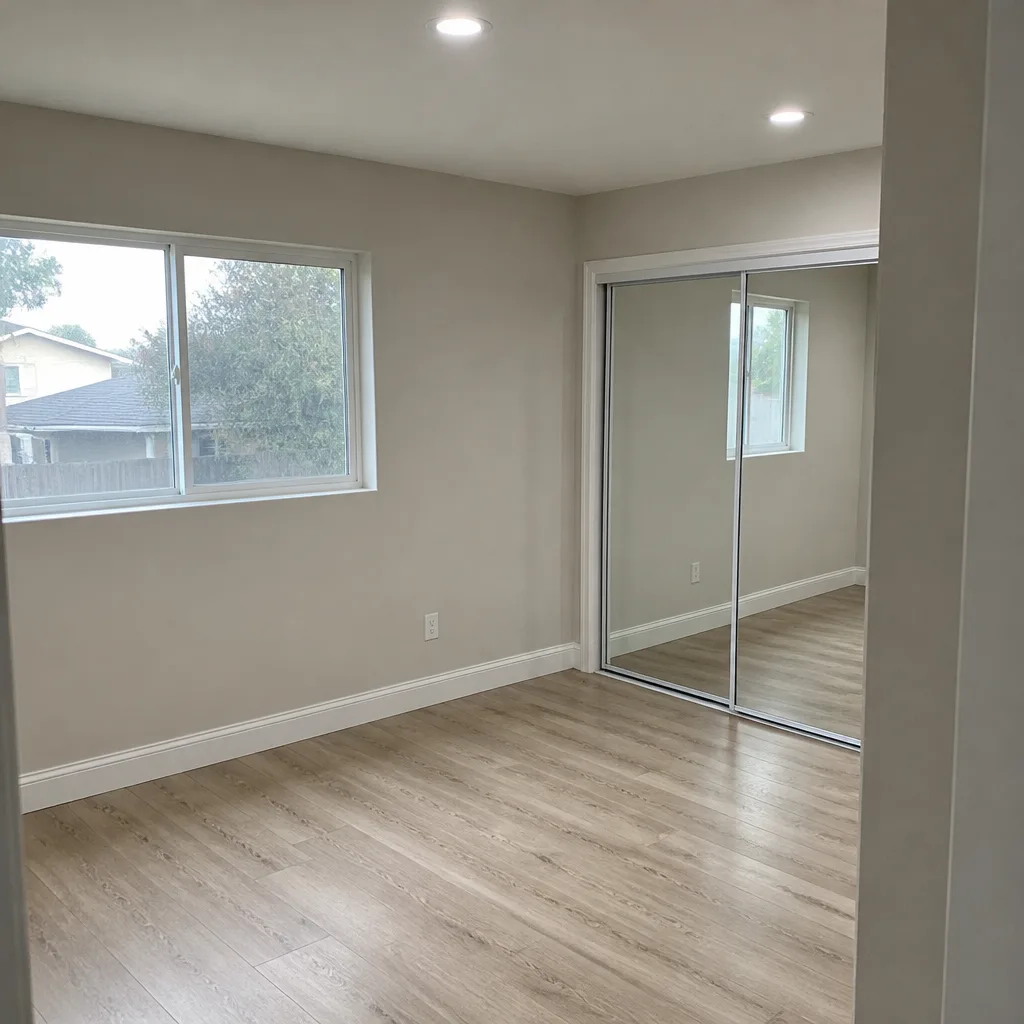 After
After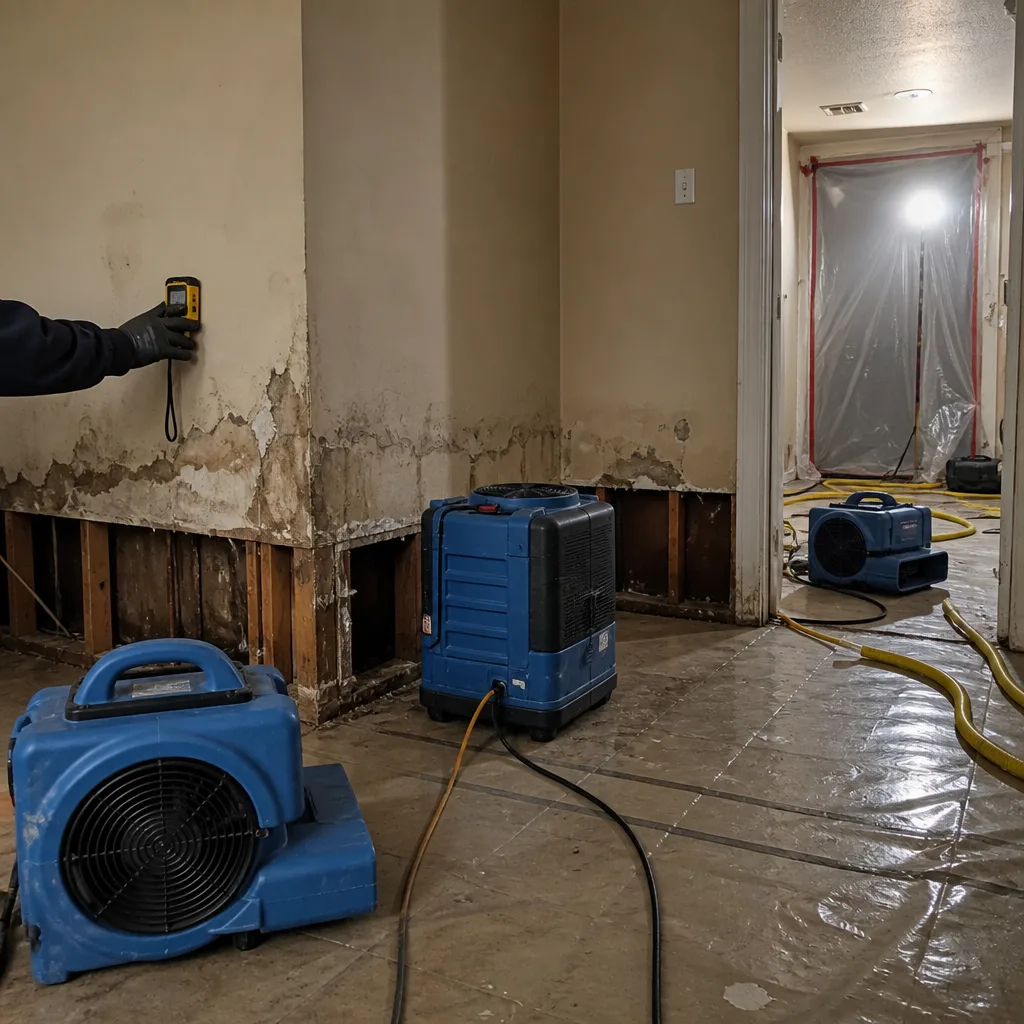 Before
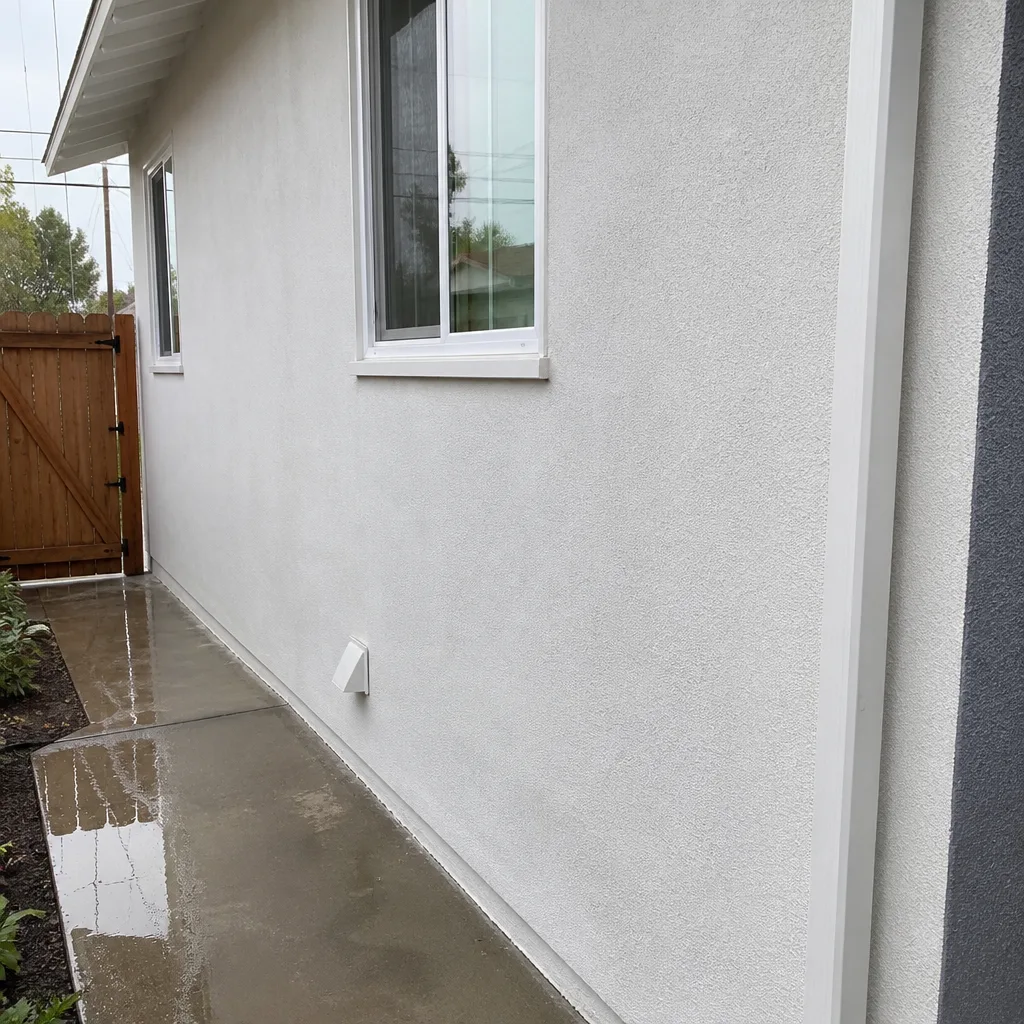 After
After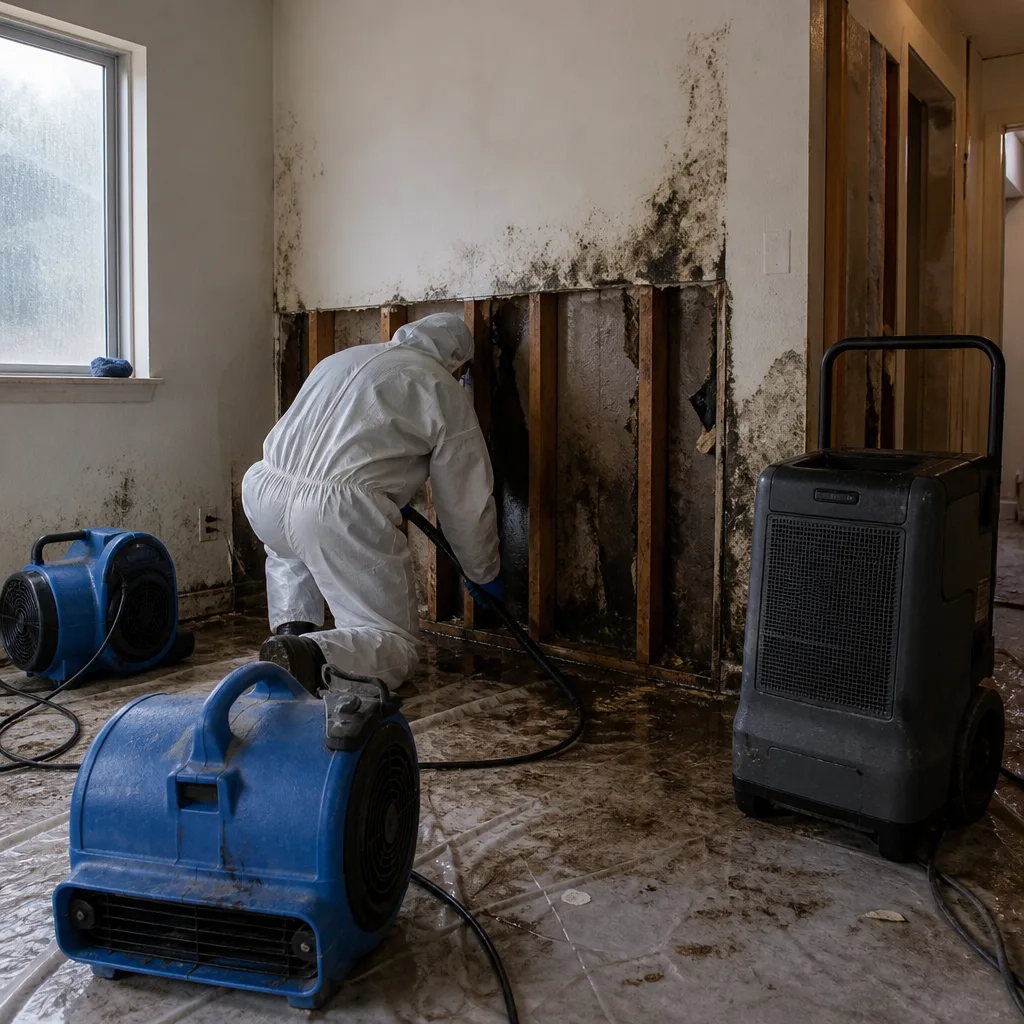 Before
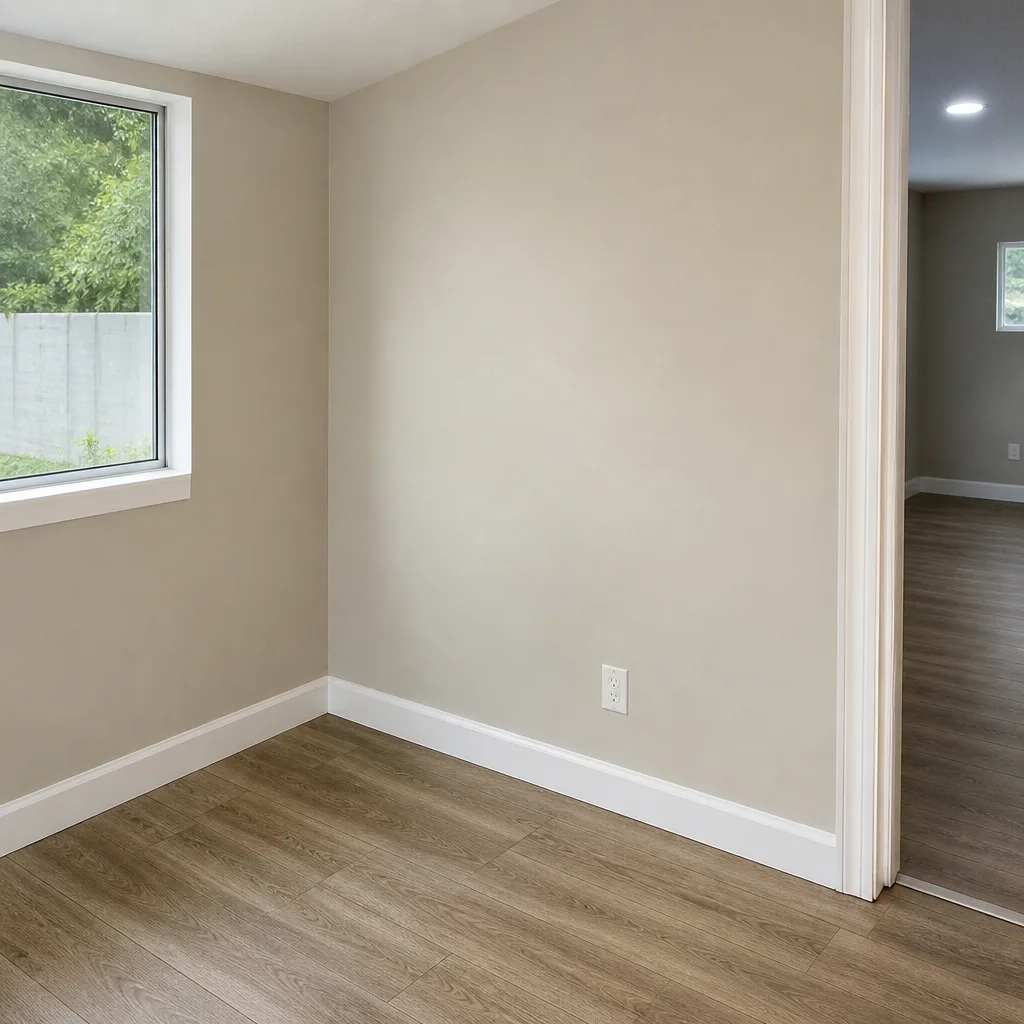 After
AfterCommon Water Damage Restoration Problems We See in Echo Park Homes
- Sediment-contaminated basement floods. When a hillside basement floods in Echo Park, the water usually brings clay, decomposed granite, and debris from the slope, not just clean pipe water. Assuming “clean water” skips category testing and leaves unsafe contamination behind, which is why our crews test first. This is the baseline assumption for many hillside basements between Echo Park Avenue and the 2 freeway.
- Unpermitted hillside additions that trap moisture. Echo Park has decades of additions built into slopes without proper drainage. Water finds these rooms, soaks into the crawl space or the back wall where the addition meets the hill, and keeps causing mold even after the visible area looks dry. We moisture-map beyond the obvious room.
- Seismic-cracked clay sewer lines. Many Echo Park homes still share original clay sewer lines that cracked in past earthquakes. Water extraction without checking the original clay line means a repeat backup and new contamination, sometimes within days. We flag this before reconstruction begins.
- Original 1920s galvanized pipes. The “Echo Park special” is a combination of original galvanized supply lines and unpermitted hillside add-ons. Summer heat causes the old metal to expand and fail. When it happens, the water runs downhill through the house, not around it.
Pricing for Water Damage Restoration in Echo Park, CA
Echo Park pricing reflects the housing stock and the hills. A single-room water extraction with structural drying on a 1960s apartment slab typically runs $1,200 – $2,800. A hillside basement flood with Category 3 water, containment, and antimicrobial treatment typically runs $2,500 – $6,500 depending on square footage and whether pack-out is needed. Flood cleanup after storm runoff through a hillside retaining wall usually runs $3,000 – $8,000 because of the mud and debris involved. Burst pipe restoration on original galvanized lines runs $1,800 – $4,500 when it includes replacing the failed pipe section. Ceiling and roof leak water damage runs $800 – $2,500 for drying and repair. Basement water removal in Echo Park typically runs $1,500 – $4,000. Every customer receives a written price before any work starts, and the number does not change at the door. Call (213) 423-6383 for an exact quote – estimates are free.
We Also Serve Cities Near Echo Park
Our Water Damage Restoration team works across the wider Los Angeles basin, not just Echo Park. If you’re in Los Angeles proper, Van Nuys, Santa Monica, or West Hollywood, the same equipment, the same guarantees, and the same live-answer phone line apply. We coordinate dispatch and scheduling from our Los Angeles office, so a crew reaches you quickly wherever you are in the basin.
Serving Echo Park, CA - Our Local Coverage Area
We’re based in the Echo Park area and know this community well. Use the map below to see our service coverage - if you’re nearby, we can almost certainly help.
FAQs About Water Damage Restoration in Echo Park
Because the hillside sheds water downhill, and many basements were carved into slopes without modern drainage. When a pipe bursts at the top of the slope or a retaining wall fails, the water picks up clay, decomposed granite, and organic debris on its way down and carries it into the lowest point of the house – usually the basement. This turns what looks like clean water into Category 3 water, which is contaminated. Testing is the only way to know for sure. Call (213) 423-6383 and we’ll test before we dry.
Mold can start growing on the paper face of drywall within 24 to 48 hours in Echo Park’s climate, and in summer heat waves that window shortens. Lathe-and-plaster walls in 1920s homes take longer to show visible mold but hold moisture deeper. The faster we get professional drying equipment running, the less likely mold becomes a separate remediation project. Call (213) 423-6383 and we’ll start moisture mapping the same day.
It’s a combination of original 1920s galvanized pipes and unpermitted hillside additions. The old pipes crack or burst, and the water flows through spaces that were never built to code or mapped on original plans. This matters because a crew that only sees the obvious damage will miss water trapped behind a hillside addition wall. Our technicians know to check for exactly this. Call (213) 423-6383 and we’ll trace the water where it actually went, not just where it’s visible.
Yes. Many Echo Park homes share original clay sewer lines that cracked in past seismic events. If the sewer line is compromised and you have a flood or backup, extracting the water without checking the line means another backup may happen after we leave. We coordinate a plumber’s camera inspection when the situation calls for it, and we won’t finish reconstruction until we know the line isn’t feeding the problem. Call (213) 423-6383 for an honest assessment before you rebuild.
Often, yes. Original fir floors, redwood framing, and gumwood trim from the 1910s-30s dry more slowly than modern lumber, but they also withstand cycles better if drying starts quickly and runs long enough. We use Injectidry panels to pull water from beneath original hardwood, and we set up containment to dry rooms in place rather than gutting them. The goal is to save what’s salvageable. Call (213) 423-6383 and we’ll give you a written drying plan before we remove anything.
If water is moving through your Echo Park home right now, don’t wait. Call (213) 423-6383. A live person answers, we give you a named arrival window, and the price is in writing before any tool touches your property. The 365-Day Done Right Promise means if a covered repair fails within a full year, we come back and make it right at no charge. That’s in writing, on every job.
Written by Carl Brandt, Owner at Dryden Restoration Los Angeles. Independent restoration, Kingswell standards, serving Echo Park and the surrounding basin.