
 Water damage drying
 Fire & smoke cleanup
 Mold remediation
 Storm response
 Sewage cleanup
 Reconstruction
Free visual inspection and a written scope of work before any mitigation begins - photos, moisture readings, and drying logs go in your claim file
The scope we write is the scope we bill. Anything new gets shown to you, in writing, before we touch it.
Get your free estimateFast, Reliable Water Damage Restoration Across Los Angeles
Water damage in Los Angeles rarely announces itself politely. A supply line lets go at 2 a.m. in a Silver Lake bungalow, an earthquake cracks a cast-iron drain beneath a Van Nuys slab, or a ceiling gives way in a West Adams Craftsman after one heavy rain. Dryden Restoration Los Angeles answers the phone with a live person, every time, and dispatches background-checked, uniformed technicians to Los Angeles neighborhoods fast. Call (213) 423-6383 day or night. We’ll give you a written price before any tool comes off the truck, and we’ll tell you exactly what we found, what it takes to fix it, and what it costs.
Why Dryden Restoration Los Angeles Is Los Angeles’s Preferred Water Damage Restoration Company
Los Angeles homeowners have a right to be skeptical. Too many have been burned by contractors who no-showed after a pipe burst, or named one price on the phone and another at the door. Dryden runs differently. We’re an independently owned and operated Kingswell company, part of a family of restoration businesses that has served communities since 2005. Every job follows The Kingswell Way: say the price before the work, show up in the window we gave, leave the place cleaner than we found it, put the guarantee in writing, and come back if it fails. Our Water Damage Restoration team works to IICRC, RIA, and IFA standards, the damage-restoration industry’s recognized benchmarks for training and ethics.
We know Los Angeles housing. We know what a 1920s Spanish Colonial in Echo Park does when a water heater ruptures. We know what a 1950s San Fernando Valley ranch does when its original cast-iron drain line finally gives. That local knowledge changes how we dry, what we test for, and how long we run equipment. And because we serve Water Damage Restoration in Los Angeles exclusively from our local Los Angeles office, dispatch and scheduling are coordinated right here, not routed through a call center three states away.
Every customer gets a written 365-Day Done Right Promise. If a covered repair fails within one full year, we return and make it right at no charge. That’s not a verbal promise. It’s documented on every single job.
Restoration work we handle
Water Extraction in Los Angeles
Water extraction in Los Angeles homes is the first and most urgent step when water is standing anywhere it shouldn’t be: a flooded basement in Hancock Park, a soaked living room in Atwater Village, a garage turned wading pool in Woodland Hills. The goal in the first hours is simple: remove as much water as physically possible before it wicks into drywall, subflooring, and framing. Our crews use truck-mounted and portable extraction units, plus Injectidry systems for hard-to-reach cavities. In Los Angeles, where many homes sit on slab foundations rather than crawl spaces, standing water has nowhere to drain. That makes fast extraction more important here than in cities with raised foundations and natural drainage.
What Water Extraction Costs in Los Angeles
A typical water extraction job in Los Angeles runs $450 – $900 for a single room with standing water. Whole-home extraction after a supply line failure or water heater rupture typically lands between $1,200 and $3,000, depending on square footage and how long the water sat. The number on your written quote is the number you’ll pay. No surprise line items when the crew arrives.
What Happens After Extraction
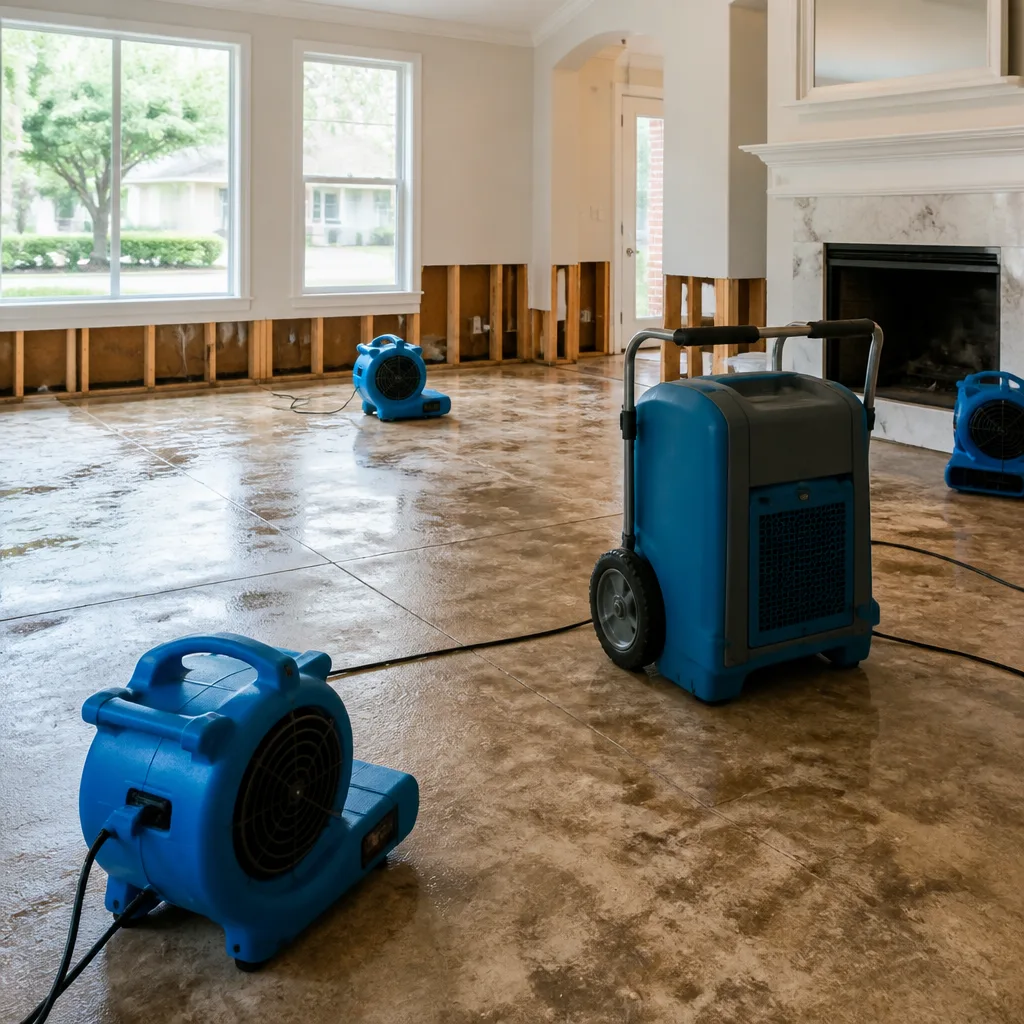
Once the standing water is gone, we map the moisture that isn’t visible. Using thermal imaging and penetrating moisture meters, we find what soaked into walls, under vinyl plank, and beneath tile. That map dictates where air movers and dehumidifiers go, and how long they’ll run. You’ll see the drying plan in writing before we start phase two.
Emergency Water Removal in Los Angeles
Emergency water removal in Los Angeles means one thing: someone needs to be on site now. A toilet supply line sheared off in a Koreatown apartment at 11 p.m. A washing machine hose failed while a family in Mid-City was at work, and 400 gallons spread through the kitchen and hall. A water heater blew out in a Mar Vista garage at dawn. We answer the phone with a live person 24 hours a day, 7 days a week. Not a voicemail, not an after-hours recording. You’ll get a named arrival window, and we’ll meet it.
Emergency Water Removal Cost in Los Angeles
Emergency water removal in Los Angeles typically costs $800 – $1,800 when it’s a single room and the water is clean Category 1 or Category 2. When a sewage backup or floodwater is involved, the job becomes Category 3 and costs rise, often $1,500 – $4,500, because of containment, antimicrobial treatment, and material disposal. We’ll tell you which category you’re dealing with and why it matters to your family’s health and your repair bill.
How Fast We Actually Get There
For emergencies in Los Angeles, our crews typically reach most neighborhoods within 45 to 90 minutes of your call. We dispatch from our Los Angeles office, so we’re not driving in from outside the county. Traffic on the 405 or the 101 is real, and we’ll give you an honest arrival window that accounts for it. If we say 75 minutes, we mean 75 minutes.
Trusted Brands We Service in Los Angeles
Our equipment fleet includes Dri-Eaz, Phoenix, XPOWER, B-Air, and Injectidry systems, the same professional-grade machines used by large commercial restoration crews. We stock spare parts for these units locally, so a failed dehumidifier doesn’t stall your dry-out. When our Los Angeles customers ask what equipment we’ll run in their home, they hear real brand names because we think you deserve to know what’s working on your house. The brands matter less than the person running them, but both should be professional.
See the difference
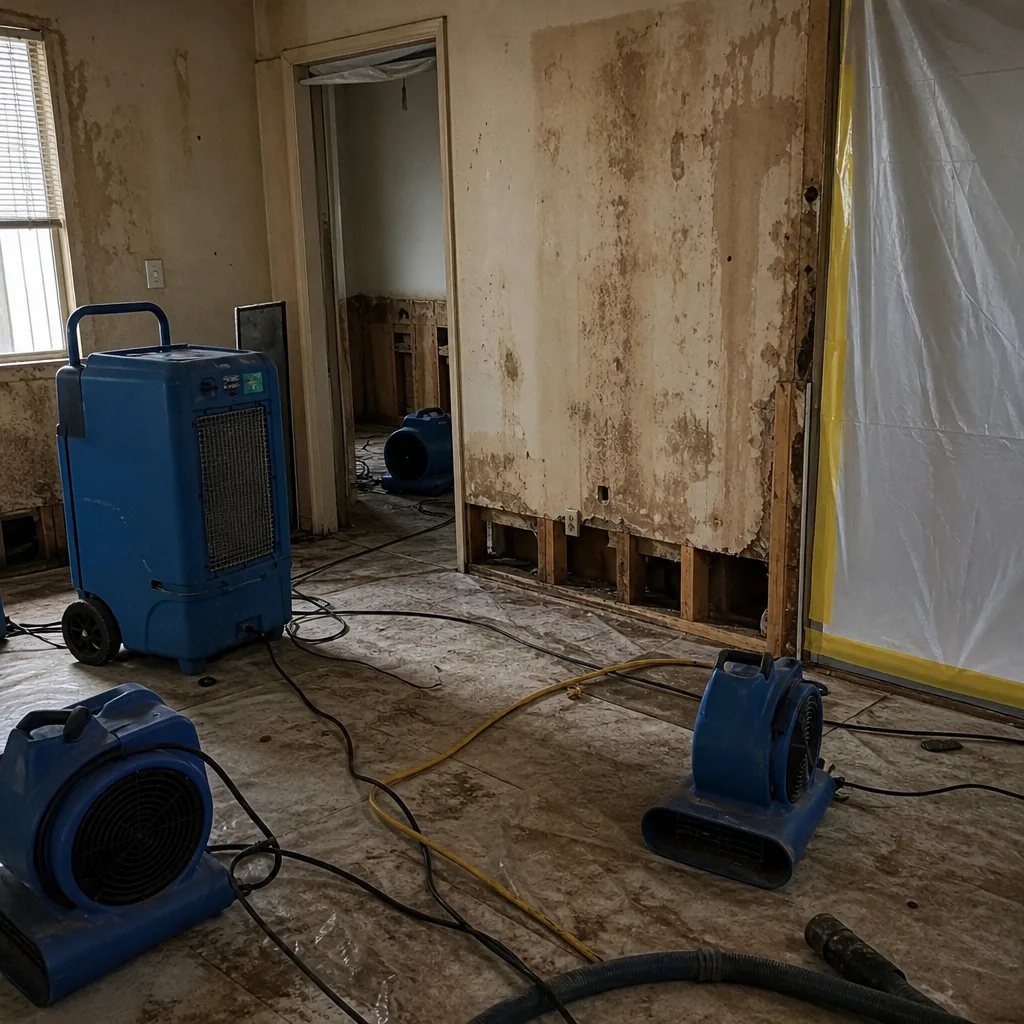 Before
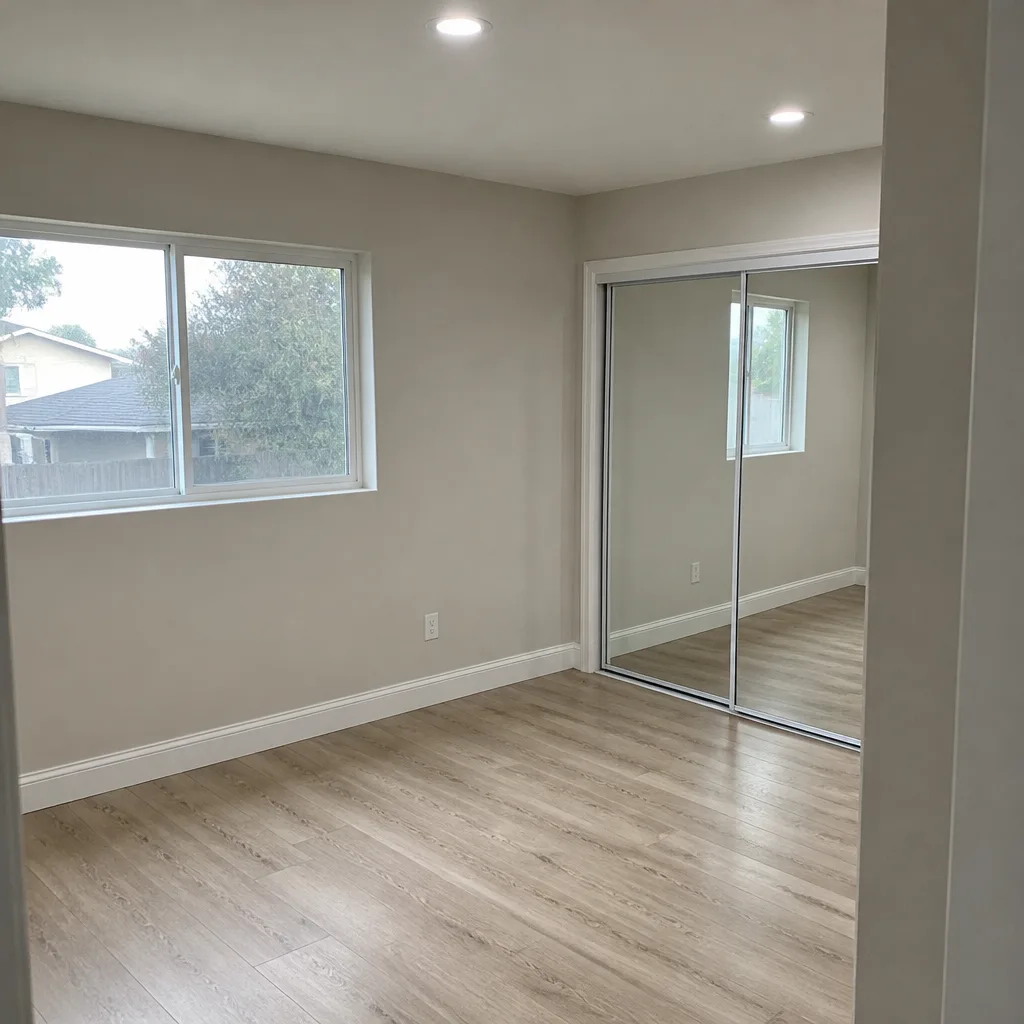 After
After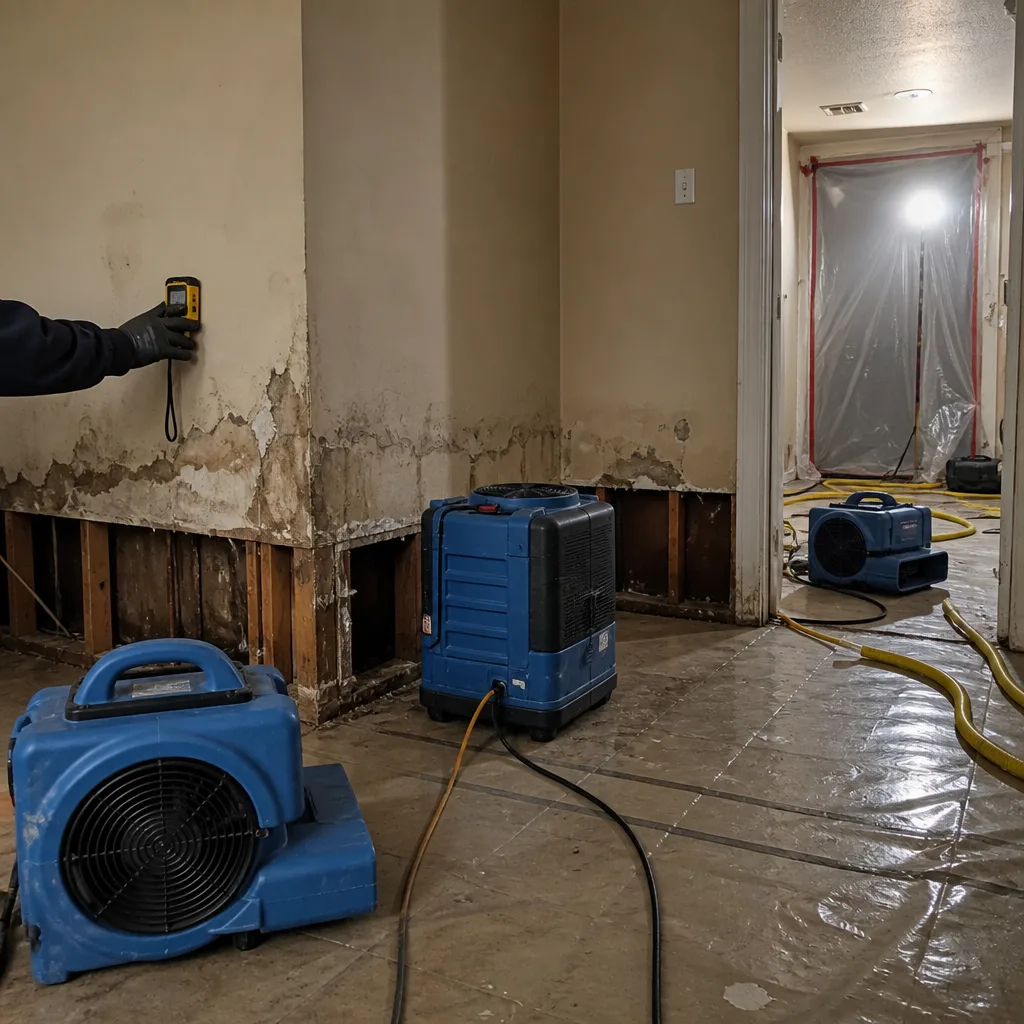 Before
 After
After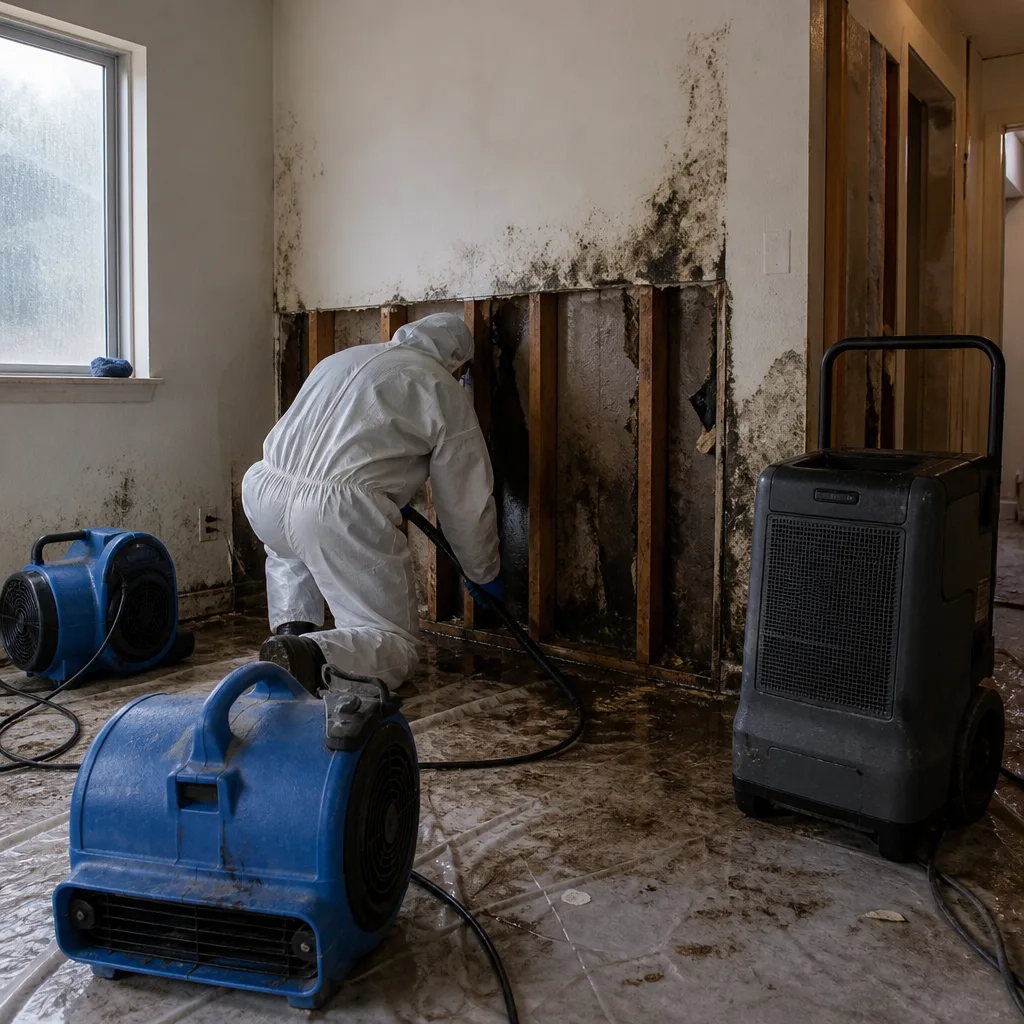 Before
 After
AfterCommon Water Damage Restoration Problems We See in Los Angeles Homes
- Hidden slab leaks after seismic events. Los Angeles sits on active faults, and even a 3.5 magnitude quake can crack a 70-year-old cast-iron drain line beneath a slab foundation. The water damage often appears weeks later as a damp baseboard or cupping hardwood, long after anyone connected the two events.
- Galvanized steel supply pipe corrosion. Many pre-1980 Los Angeles homes still have original galvanized supply lines. The interior rusts, pressure drops, pinholes form, and a homeowner patches the drywall without realizing the entire run is past service life. It fails again six feet down the line.
- Drying lath-and-plaster walls improperly. Los Angeles has a huge inventory of 1920s through 1950s homes with lath-and-plaster construction. When Category 3 water saturates those walls, skipping antimicrobial treatment means mold blooms behind the plaster before drying logs are complete. You won’t see it until it’s bad.
- Re-flooding from un-scoped drain lines. A crew finishes structural drying after a small quake, but a mild aftershock reopens the same cast-iron crack and floods the same hallway again. If the original pipe was never scoped, you’re paying twice for the same failure.
Pricing for Water Damage Restoration in Los Angeles, CA
Water damage restoration pricing in Los Angeles runs from about $700 for a small, clean single-room extraction with targeted drying, up to $8,000 – $15,000 for a larger job involving sewage, multiple rooms, and structural material removal. What moves the number is square footage affected, water category, how long the water sat, whether drywall and flooring come out, and whether the damage traces back to a pipe that itself needs repair. Los Angeles prices skew higher than, say, Bakersfield or Riverside because labor rates, permit coordination, and material costs all run higher in metro Los Angeles. Before anything starts, you’ll get a written price. We walk the property, we explain what we found, and the number doesn’t change at the door.
We Also Serve Cities Near Los Angeles
Beyond Los Angeles proper, our crews serve Maywood, Bell Gardens, Compton, and Lawndale. If you live in one of those communities and you’re dealing with a burst supply line, a failed water heater, or storm-driven water intrusion, call the same Los Angeles office at (213) 423-6383. Same live-person answer, same written pricing, same 365-Day Done Right Promise, brought by our Water Damage Restoration team.
Serving Los Angeles, CA - Our Local Coverage Area
We’re based in the Los Angeles area and know this community well. Use the map below to see our service coverage - if you’re nearby, we can almost certainly help.
FAQs About Water Damage Restoration in Los Angeles
Because most 1950s-era Valley homes were built with cast-iron drain lines set directly beneath concrete slabs. Cast iron corrodes from the inside over decades. When a quake hits, even a minor one, the ground motion flexes those brittle lines at their thinnest points. The crack may start as a hairline, but wastewater under the slab is under pressure from the fixture above it, so it seeps out slowly. You won’t smell it. You’ll see a damp spot on the floor or a stain on a baseboard two weeks later. That’s why we scope drain lines after seismic events in Los Angeles neighborhoods from Encino to North Hollywood, not just dry the surface and call it done. Call (213) 423-6383 if you suspect a slab leak; we’ll find it before it spreads.
Wildfire season in Los Angeles brings water damage in two forms: first, from firefighting efforts themselves, where hundreds of gallons of water get sprayed into wall cavities and attics of homes near burn zones, making Fire Damage Restoration - Los Angeles a critical service; and second, from the heavy winter rains that follow fire seasons, when burn-scarred hillsides in neighborhoods like the Hollywood Hills and Bel Air become flood and mudslide risks. Our crews see a seasonal spike in water intrusion through roofs and foundations right after wildfire season, when the dry brush that held hillside soil together is gone. The drying challenge in these situations is compounded by ash and soot mixed into the water, which requires different filtration and antimicrobial protocols than a standard supply-line leak.
This question deserves a straight answer. Knob-and-tube wiring that has been soaked with water should be evaluated by a licensed electrician before drying proceeds. Water can degrade the cloth insulation and create a shock or fire hazard when power is restored. Our restoration technicians will identify and map affected areas, but we don’t advise homeowners on electrical code or safety questions; we’ll recommend an electrician if the wiring looks original and wet. The drying itself, after the electrical panel is off and the circuit is de-energized, follows the same structural drying principles as any other wall. But no drying plan works if the wiring is left live and compromised.
The 24-to-48-hour mold window is the time before mold spores, which exist in every home, start colonizing wet organic material like drywall paper, wood framing, and plaster backing. In Los Angeles’s older homes, with their lath-and-plaster walls and uninsulated cavities, moisture hides longer because these materials absorb more water and release it more slowly. What looks dry on the surface can still be wet inside, especially in the San Fernando Valley’s dry air, which pulls moisture away from the surface and sends it deeper into the wall. That’s why we run moisture meters and thermal imaging, not just a visual check, and why we start extraction and drying within hours, not days.
You don’t have to replace the entire line if the damage is isolated. A single crack in a straight section of cast-iron drain line can often be repaired economically with a proper coupling or patch. But if our scope shows a pattern of corrosion, multiple hairline cracks, or deterioration that suggests the whole run is nearing end of service life, we’ll tell you straight: replacing the section or the entire line may be cheaper than drying out the same hallway a third time. Los Angeles homes with original cast-iron drains from the 1940s and 1950s are at the highest risk. We’ll show you the scope footage, explain what we saw, and give you a written price for either option. Estimates are free. Call (213) 423-6383 to schedule one.
Written by Carl Brandt, Owner at Dryden Restoration Los Angeles, serving Los Angeles since 2005.